The Waterfall methodology is a linear, sequential Software Development Life Cycle (SDLC) model where progress flows downwards through distinct phases—much like a cascading waterfall. In a pure Waterfall framework, each phase must be fully completed, documented, and signed off before
Home
Requirement Prioritization Techniques: Complete Guide for Business Analysts
Requirement prioritization is the process of evaluating, categorizing, and ranking software requirements to determine the exact order in which they should be built and delivered. For Business Analysts (BAs), Product Owners, and Scrum Masters, effective prioritization ensures that limited development
What is INVEST Criteria in Agile User Stories? A Business Analyst’s Guide
In Agile product development and Scrum frameworks, INVEST is an acronym and quality assurance checklist used by Business Analysts and Product Owners to ensure that User Stories are well-formed, actionable, and ready for development during sprint planning.
Created by Bill
What is an Epic in Agile? A Business Analyst’s Guide
In Agile product development and Scrum frameworks, an Epic is a large body of work that captures a significant business requirement or overarching feature set that cannot be completed in a single iteration or sprint.
Because an Epic is too
AI Tools in Business Analysis: Elevating Efficiency and Strategy
Artificial Intelligence is fundamentally transforming the software development lifecycle (SDLC) and how Business Analysts (BAs) gather, analyze, document, and validate requirements. Rather than replacing the BA, AI acts as a force multiplier—automating repetitive administrative tasks so BAs can focus
Business Analytics Life Cycle: From Data to Decisions
In today’s data-driven enterprise, raw data holds little value unless it is systematically gathered, analyzed, and translated into strategic business actions. The Business Analytics Life Cycle is a structured, iterative framework that guides organizations through transforming raw transactional data into
Business Analysis Certifications Beyond CBAP: A Comprehensive Guide
While the CBAP (Certified Business Analysis Professional) from IIBA is widely recognized as the gold standard for senior practitioners, it is not the only—or always the most suitable—certification for every career stage.
Whether you are an entry-level professional lacking the
Credit Card Bill Payment Life Cycle: A Comprehensive Overview for Business Analysts
Understanding the Credit Card Bill Payment Life Cycle is an essential domain skill for Business Analysts working in Banking, Financial Services, and Insurance (BFSI), Fintech, and Payment Gateway integrations.
Key Tools Used by Business Analysts: Comprehensive Guide
In modern software development and enterprise business analysis, Business Analyst (BA) tools enable analysts to gather requirements, visualize complex business workflows, design user interface wireframes, analyze data sets, and collaborate seamlessly across cross-functional teams.
What Are the Essential Tools Used
Requirement Gathering and Analysis: A Guide for Project Success
Software development and project management have Requirement Gathering and Analysis. What is Required by the software or business systems is based on this approach. Through Requirement Gathering and Analysis business requirements are elicitated, developed, evaluated and then structured for stakeholders
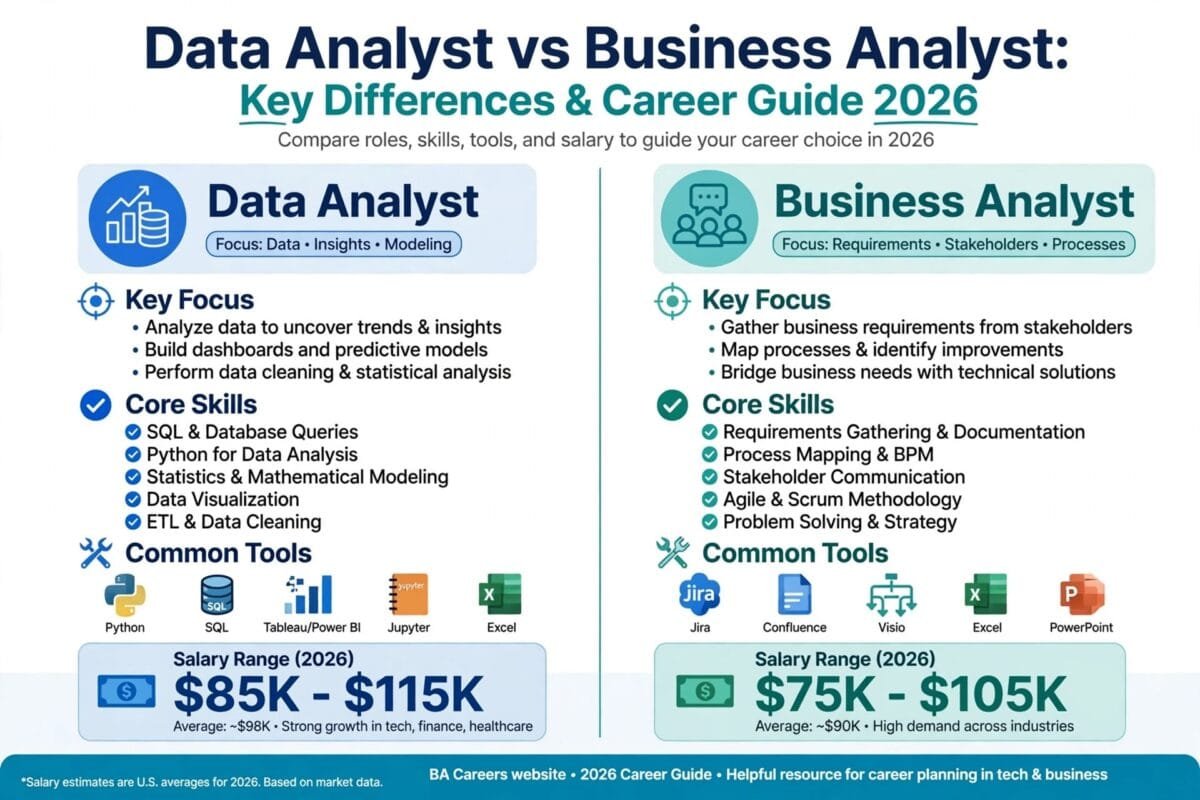
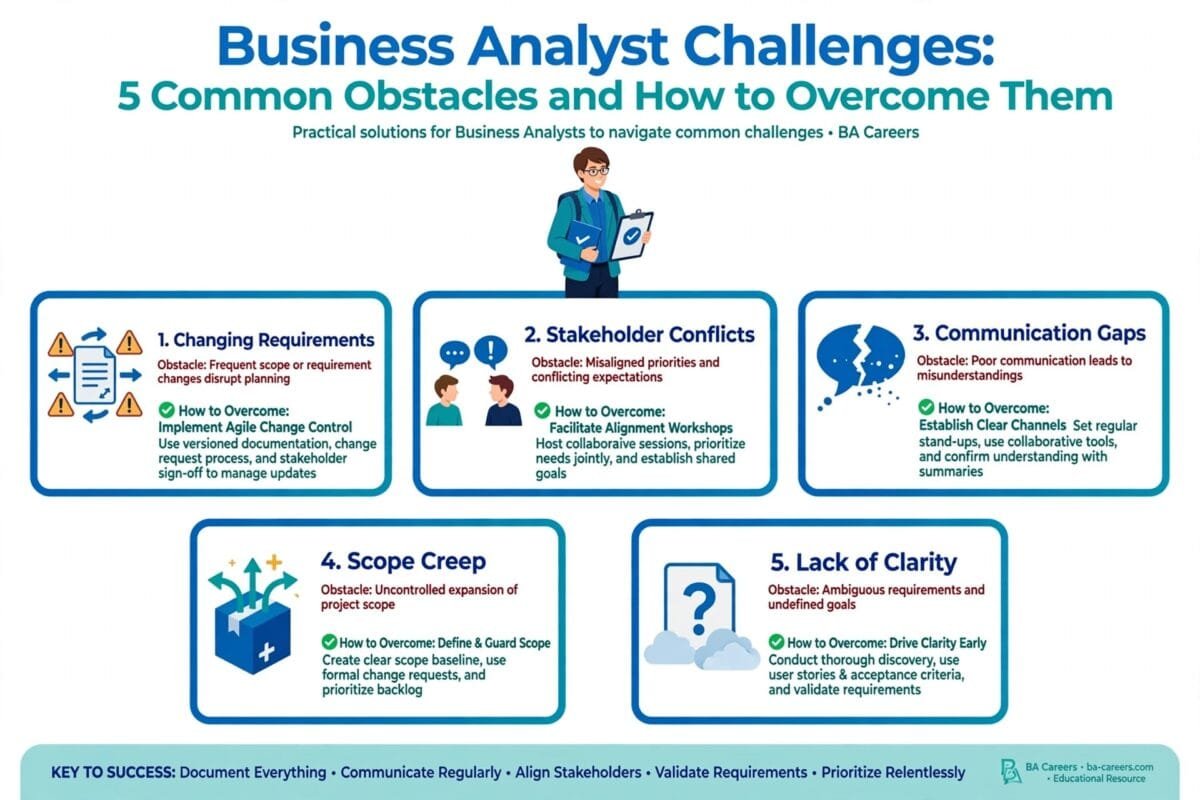
What is the Role of a Business Analyst? The Ultimate Guide
What is the Role of Business Analyst
A Business Analyst (BA) acts as a vital bridge between business stakeholders and technical execution teams. The primary role of a Business Analyst is to analyze business processes, identify operational bottlenecks, elicit requirements,
10 Practical Examples of Activity Diagrams in Software Engineering
In Unified Modeling Language (UML) and software engineering, an Activity Diagram is a behavioral diagram that visually maps the step-by-step flow of control, decisions, and parallel activities within a system or business process.
Often described as an advanced or standardized
What is the MoSCoW Technique in Requirements Prioritization? The Complete Guide
In project management, Agile software development, and business analysis, the MoSCoW technique (or MoSCoW method) is a popular framework used to categorize and prioritize requirements based on their importance and urgency to the business.
Developed by Dai Clegg in 1994
Kanban Methodology in Software Development: The Complete Guide
Kanban methodology is an Agile continuous-improvement framework designed to visualize work, limit work-in-progress (WIP), and maximize operational throughput.
Originally developed by Taiichi Ohno at Toyota for lean manufacturing, Kanban has become one of the most widely adopted Agile frameworks in
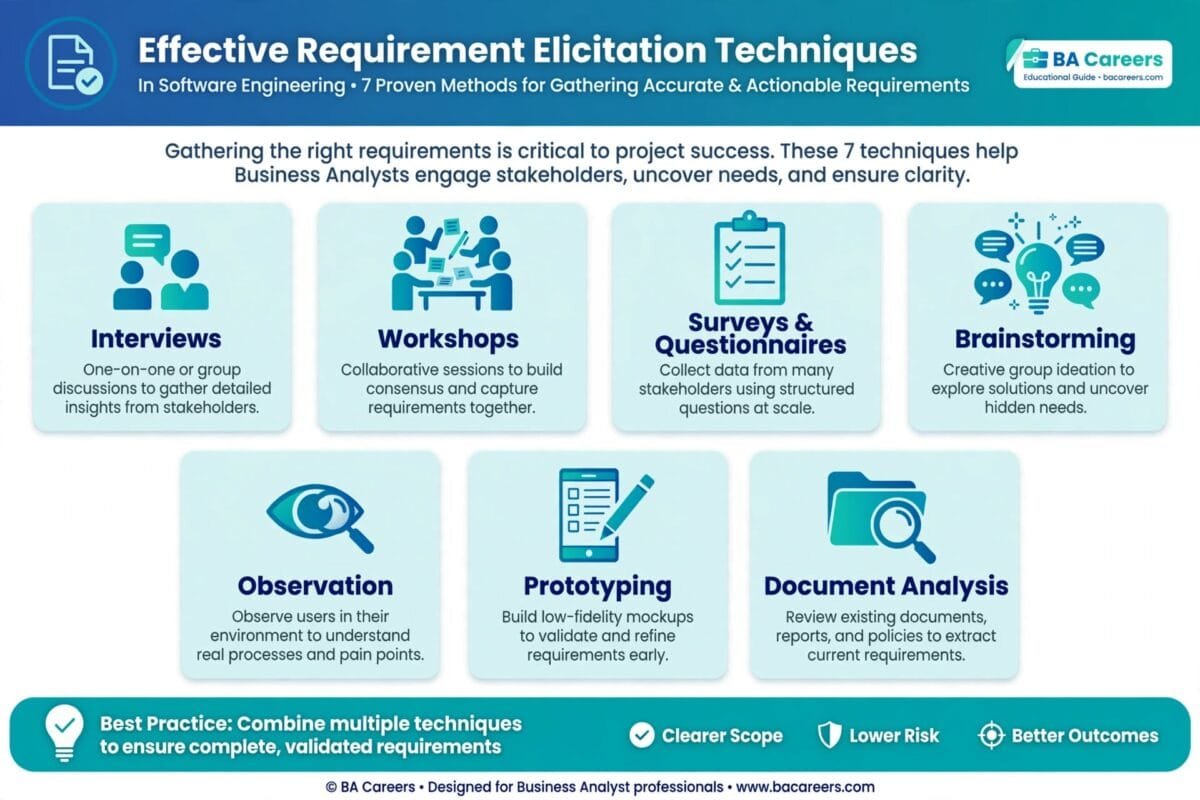
Top Requirement Elicitation Techniques in Business Analysis: Complete Guide
Requirement elicitation is the process of researching, discovering, extracting, and uncovering business needs, technical requirements, and operational constraints from stakeholders, end users, and existing system documentation.
Unlike passive “requirement gathering,” active elicitation requires a Business Analyst (BA) to investigate hidden
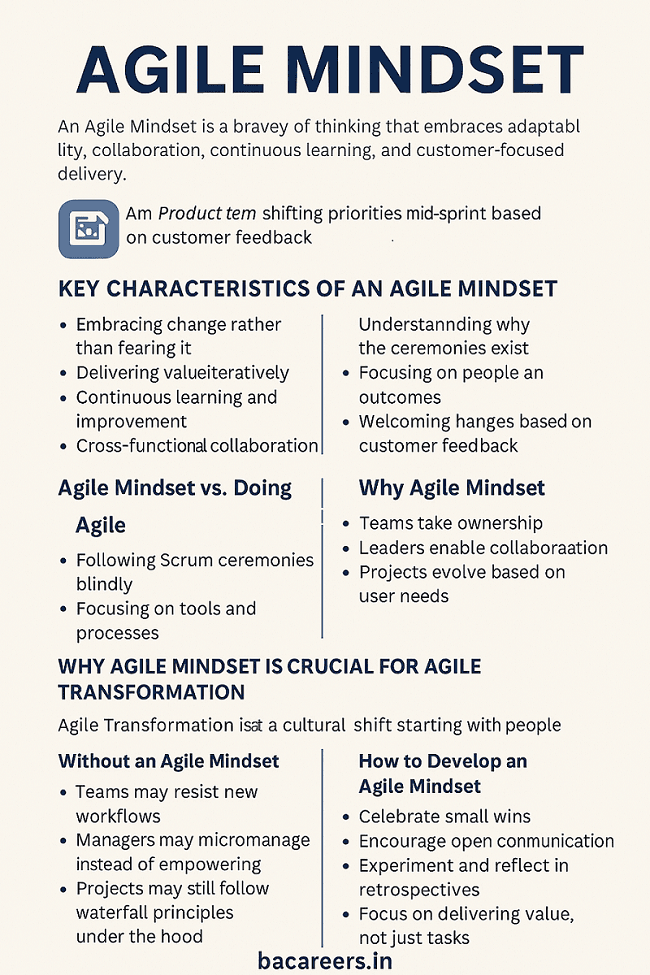
Essential Agile BA Tools: Guide with Real-Time Project Scenarios
In fast-paced Agile and Scrum environments, Agile BA tools enable Business Analysts to translate high-level business goals into actionable user stories, facilitate interactive backlog refinement sessions, collaborate asynchronously with distributed teams, and maintain clear traceability throughout dynamic sprint cycles.
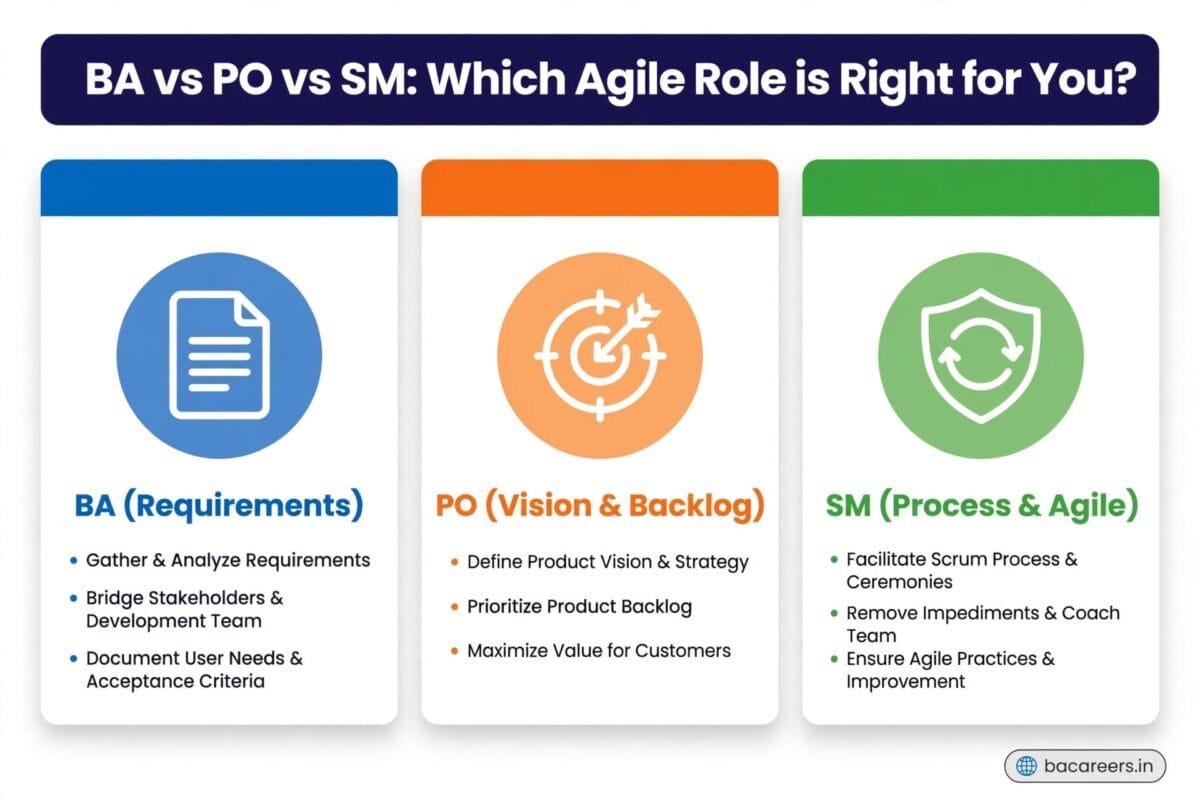
Scrum Roles and Responsibilities: Complete Guide & BA Perspective
The key three roles defined within Scrum are simple and have tight boundaries: – The Product Owner – The Scrum Master – The Developers (sometimes referred to as the Dev Team / Development Team These 3 make up the Scrum
Key Documents Prepared by a Business Analyst: Complete Guide & Artifacts
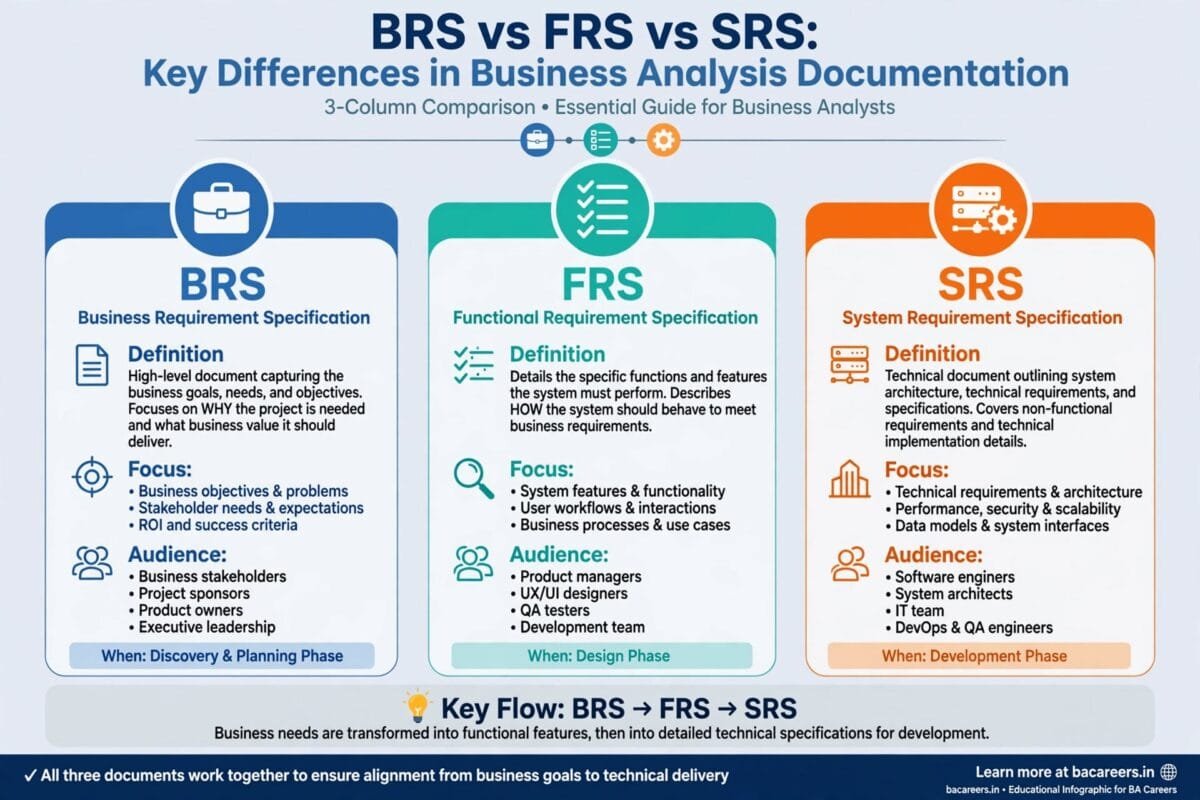
Business Analysis documents created by the BA function as important communication tools linking Business stake holders, product owners, developers and qa teams within the software development or project management organization. Business Analysis documents aka BA Artifacts, convert top-level business
UAT Meaning in Software Development: Complete Guide & BA Role
UAT, which stands for User Acceptance Testing, is the final phase of the software testing process where real end users, business stakeholders, or clients test the application in a production-like environment to verify whether the software meets agreed
User Story Examples: Complete Guide & Template for Business Analysts
A user story is an informal, general explanation of a software feature written from the perspective of the end user or customer. In Agile and Scrum frameworks, user stories serve as the primary building blocks for project backlogs, turning complex