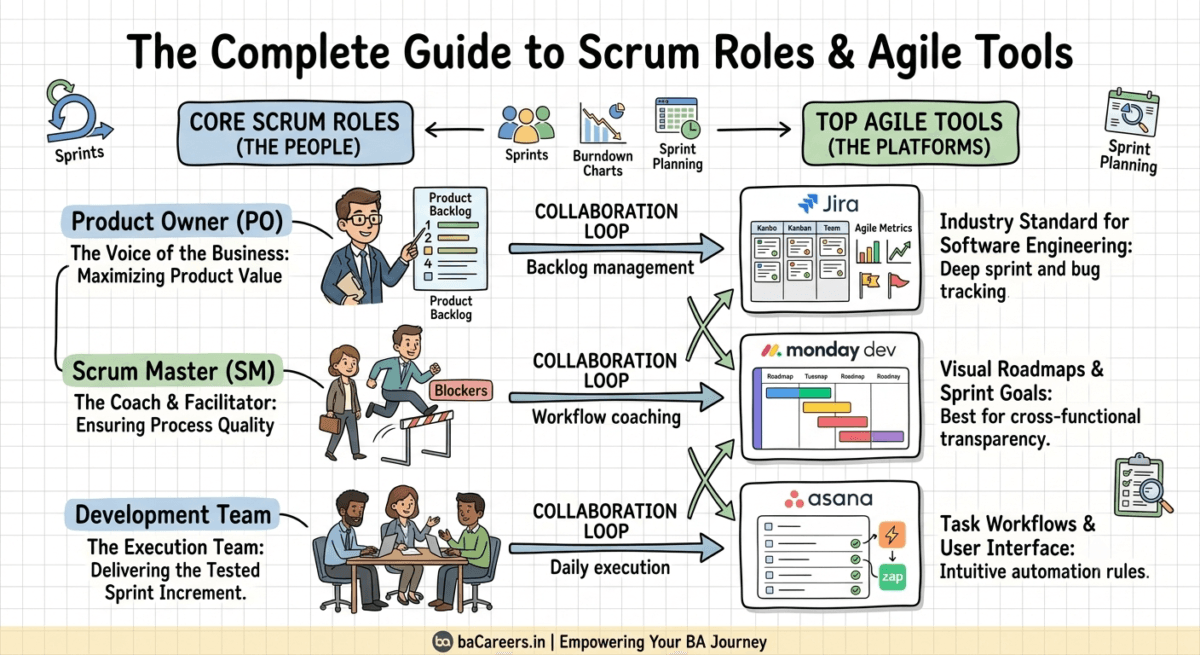
The Ultimate Guide to Scrum Roles and Agile Tools. Achieving on-time, high-quality software delivery involves two components: precise human roles and robust software. When an organization decides to transition to the Scrum framework, it typically faces two initial hurdles:
Tag: agile business analyst
An Agile Business Analyst plays a crucial role in Agile software development projects. They bridge the gap between business stakeholders and the development team, ensuring that the project goals are understood and met. Here are some key responsibilities and skills of an Agile Business Analyst:
1. Requirements Gathering and Management: An Agile Business Analyst works closely with business stakeholders to elicit, analyze, and document requirements for the software project. They facilitate workshops, interviews, and discussions to understand the needs and objectives of the business. They also prioritize and manage the requirements backlog, ensuring that the most valuable features are delivered first. 2. User Story Development: In Agile methodologies like Scrum, user stories are used to capture user requirements and guide development. Agile Business Analysts collaborate with stakeholders and the development team to create user stories that are clear, concise, and actionable. They ensure that user stories are appropriately sized and contain the necessary details for the development team to implement them effectively. 3. Agile Planning and Estimation: Agile Business Analysts contribute to the planning and estimation process in Agile projects. They assist in defining project scope, identifying deliverables, and estimating the effort required for each task. They work closely with the development team to break down user stories into smaller tasks and provide input on the feasibility and complexity of implementing each feature. 4. Continuous Collaboration and Communication: Agile Business Analysts act as a liaison between business stakeholders, product owners, and the development team. They facilitate ongoing communication and collaboration to ensure that everyone has a shared understanding of project goals, requirements, and progress. They may conduct regular meetings, such as daily stand-ups and sprint reviews, to keep all stakeholders informed and address any issues or risks that arise. 5. Agile Documentation: While Agile methodologies prioritize working software over comprehensive documentation, Agile Business Analysts still play a role in documenting key information. They may create and maintain process flows, wireframes, mockups, and other visual aids to support requirements understanding and communication. They also update documentation as requirements evolve throughout the project. 6. Continuous Improvement: Agile Business Analysts contribute to the continuous improvement of the Agile process. They actively seek feedback from stakeholders and the development team to identify areas for improvement and implement changes that enhance the efficiency and effectiveness of the project. They may also facilitate retrospective meetings to reflect on the project’s performance and identify lessons learned for future iterations. In summary, an Agile Business Analyst is responsible for gathering and managing requirements, developing user stories, planning and estimating tasks, facilitating collaboration and communication, documenting key information, and driving continuous improvement in Agile software development projects. Their role is crucial in ensuring that the project delivers value to the business and meets the needs of the end-users.
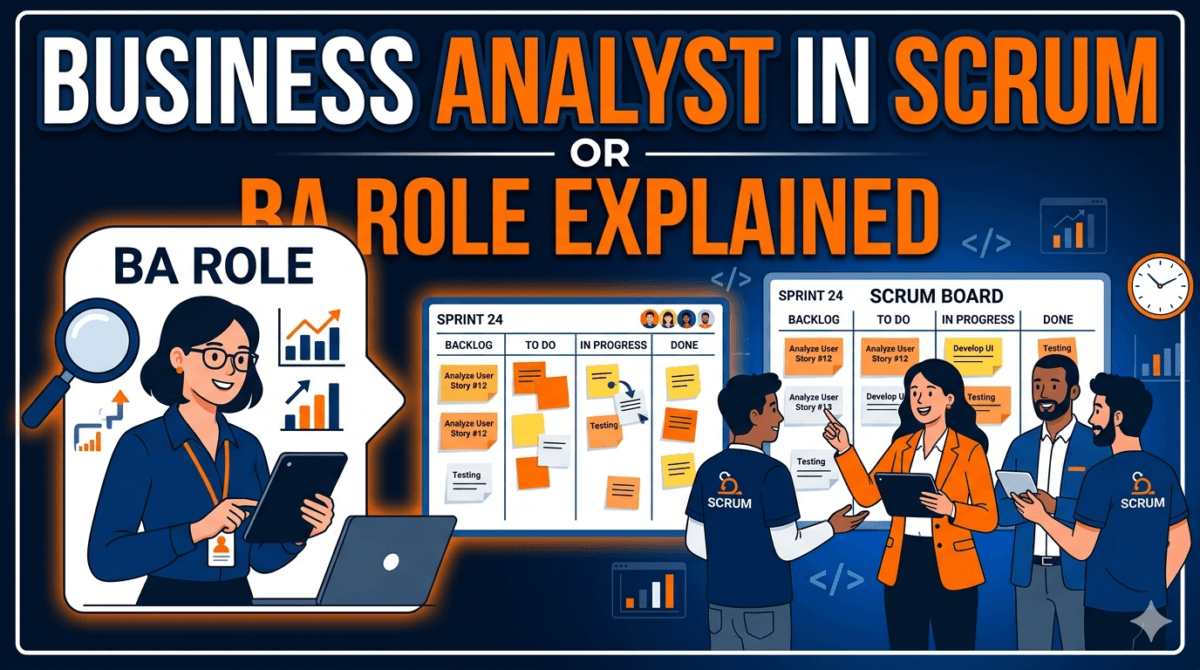
Role of Business Analyst in Agile Scrum: Responsibilities, Skills & Real Project Example
Introduction
Role of Business Analyst in Agile Scrum : Imagine spending six months gathering requirements. The development team builds everything. After the succceful development client says :
“That is not the requirement what we given.”
Now the project is delayed
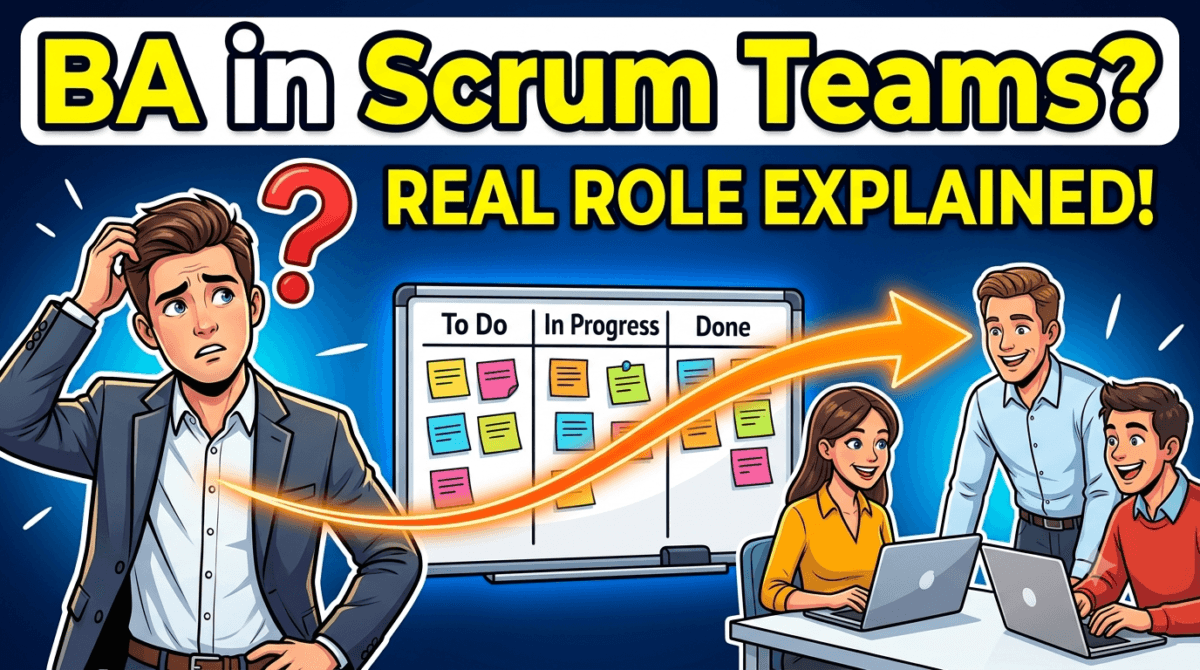
How Business Analysts Work in Scrum Teams: Roles, Responsibilities, User Stories & Interview Questions
How Business Analysts Work in Scrum Teams
Business Analyst in Scrum Teams : Imagine joining a Scrum project as a Business Analyst.
You attend daily stand-ups, write user stories, talk to stakeholders, but suddenly during an interview, the recruiter asks:
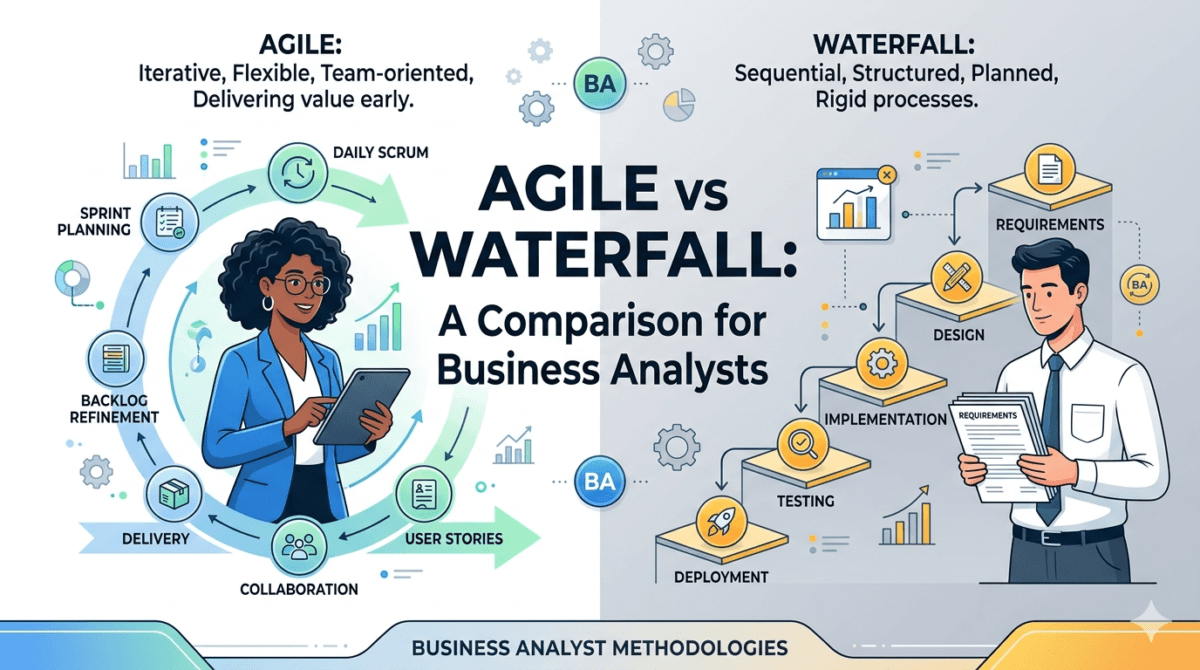
Agile vs Waterfall for Business Analysts: Key Differences, Roles & Real Examples (2026 Guide)
Agile vs Waterfall for Business Analysts: Complete Beginner Guide with Real Examples
Are You Confused Between Agile and Waterfall?
Agile vs Waterfall for Business Analysts – Imagine spending 8 months collecting requirements for a project and just before release the
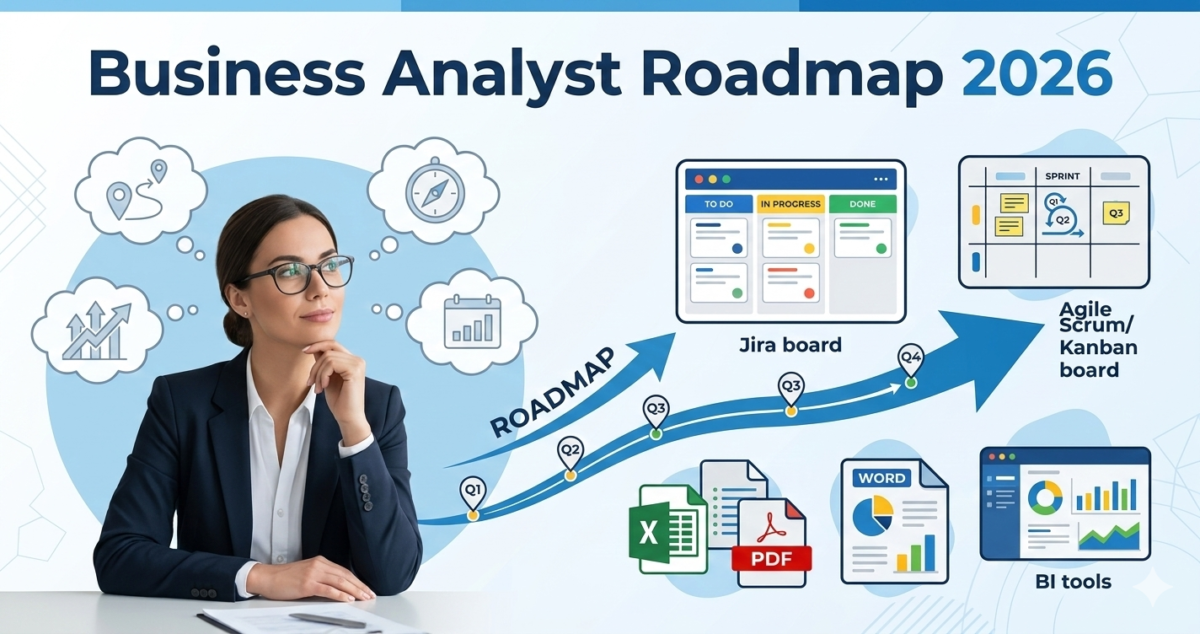
Business Analyst Roadmap 2026 (Complete Beginner Guide)
How to Become a Business Analyst in 2026 – Step by Step Roadmap
Hi friends, do you want to become a Business Analyst in 2026 but don’t know where to start? Business Analyst Roadmap 2026.
Are you confused about skills,
Agile Ceremonies: Beyond the Checklist for BAs
What if all the things you thought you knew about your role in Agile ceremonies were just the surface of a bigger picture?
Most Business Analysts take part in Agile ceremonies every sprint — daily stand–ups,
Agile Metrics for Business Value (BA Perspective)
Introduction:
Business Analysts are changing the way teams deliver value, moving beyond traditional metrics. Understanding how Agile teams perform in business terms is crucial. This article highlights how metrics can be transformed into insights that guide business
Agile Metrics: Measuring BA Impact Effectively
“Forget what you think you know about BA metrics. Most Business Analysts are measuring the wrong things, and this can make their big contributions to Agile success go unnoticed. In this guide, we’ll reveal the
Negotiation Skills for Agile Product Owners
Negotiation skills for Agile Product Owners
🧭 Top Tools for Modern Business Analysts
“What if I told you that the secret to becoming a top-tier business analyst isn’t just about your skills, but the powerful tools you wield?”
Forget outdated methods. In this new era of digital transformation, Business Analysts (BAs) are no
Future-Proof Your BA Career Now
Introduction
Future-Proof business analyst career – Your Business Analyst (BA) career, as you know it, is about to change. Don’t be caught unprepared. This isn’t just about learning new software — it’s about rethinking how you deliver business value in
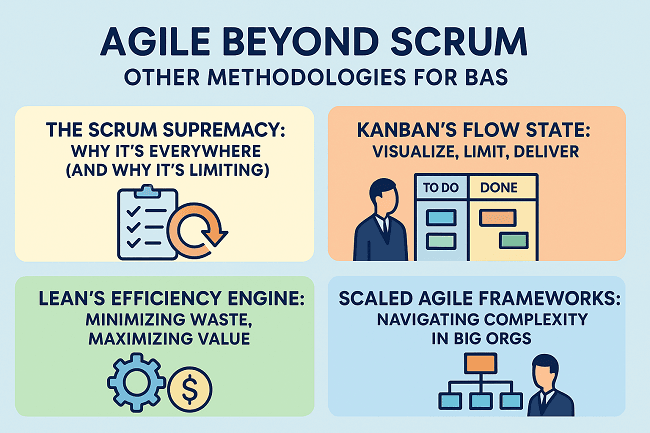
Agile Beyond Scrum: Other Methodologies for BAs
Introduction: Expanding the Agile Horizon
Many Business Analysts (BAs) today work within Scrum frameworks — sprint planning, daily stand-ups, and retrospectives have become part of everyday vocabulary. But Agile is much broader than Scrum. Limiting yourself to one framework can
Agile Thinking: The Mindset Behind Successful Agile Transformation
🚀 Agile Thinking: The Mindset Behind Successful Agile Transformation
🔍 Introduction to Agile Thinking
In the fast-paced world of business, speed, adaptability, and innovation are essential for survival. Agile Thinking is not just a methodology—it’s a mindset that empowers individuals
Agile Leadership: Driving Success in Agile Teams
🔍 Introduction to Agile Leadership
Agile leadership is not about being the boss; it’s about guiding teams with flexibility, empathy, and empowerment. In today’s fast-changing business environment, traditional command-and-control leadership styles are no longer effective. Agile leaders focus on
Business Analyst in Agile : Roles, Responsibilities, and Real-World Scenarios
Agile Business Analyst: Roles, Responsibilities, and Real-World Scenarios
Introduction
In today’s fast-paced software development world, agility is no longer optional—it’s essential. This is where the Agile Business Analyst (Agile BA) comes in. An Agile Business Analyst plays a crucial role
Agile Business Analysis Techniques – Detailed Guide with Examples
Agile Business Analysis Techniques – Agile Business Analysis focuses on delivering value quickly and efficiently. Unlike traditional models, Agile Business Analysts (Agile BAs) work closely with the development team and stakeholders
Agile vs. Waterfall for Business Analysts: A Comprehensive Comparison
Agile vs. Waterfall for Business Analysts : In the world of software development and project management, two popular methodologies—agile and waterfall—come to the fore. For business analysts, understanding these processes is
Best Practices for Writing User Story: A Comprehensive Guide
User Story Writing Best Practices
User Story Writing Best Practices : User feedback is an important part of agile project management and provides a simple and effective way to capture product requirements. They help bridge the gap between development teams
Agile Methodology for Business Analysts
Agile Methodology for Business Analysts : Agile methodology is a revolutionary software development approach that emphasizes flexibility, collaboration, and customer satisfaction. This is in contrast to traditional methods such as waterfall, where projects are broken
How to Conduct a Standup Meeting: A Comprehensive Guide
Daily Standup Meeting : Standup meetings are a crucial part of Agile project management, fostering communication, collaboration, and alignment within teams. This guide will walk you through how to conduct effective standup meetings and provide tips to enhance their effectiveness.