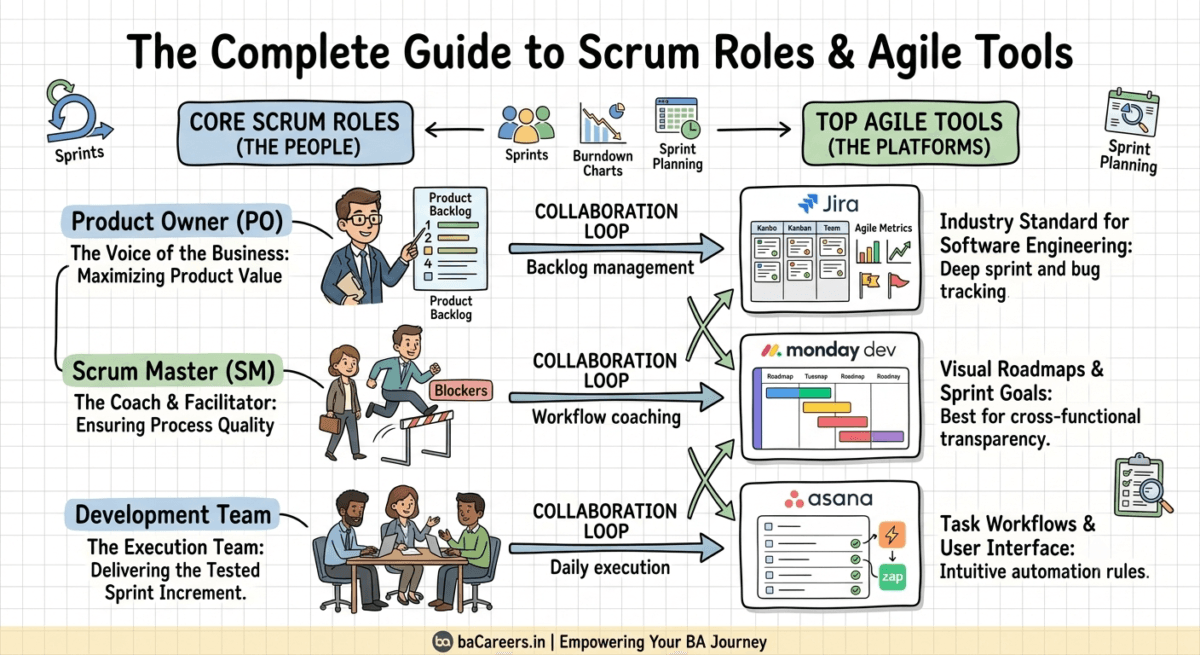
The Ultimate Guide to Scrum Roles and Agile Tools. Achieving on-time, high-quality software delivery involves two components: precise human roles and robust software. When an organization decides to transition to the Scrum framework, it typically faces two initial hurdles:
Tag: Kanban Methodology
Kanban is a methodology that originated in the Japanese manufacturing sector, specifically from Toyota’s production system, as a system to control and manage work and inventory at every stage of production optimally. It has since been adapted for use in various industries, including software development and other IT-related fields, as well as marketing, HR, and so on.
In Japanese, the term Kanban means “visual signal” or “card.” In the context of project management, Kanban is a visual system for managing work as it moves through a process.
Here are the core principles of Kanban methodology:
- Visualize Work: Seeing work in a visual form allows teams to observe the flow of work from start to finish. Typically, the work items are represented on a Kanban board with cards and columns. Each card represents a task, and each column represents a stage in the process.
- Limit Work in Progress (WIP): Limiting WIP is key to implementing Kanban. By limiting the amount of work in progress, you reduce the time taken from the beginning to the end of the process, enhance focus, and quickly spot bottlenecks.
- Manage Flow: The goal of Kanban is to create a smooth, sustainable flow of work. By tracking the movement of work items, teams can analyze their flow and make necessary adjustments.
- Explicit Process Policies: Every member of the team should understand the process and the criteria for moving work from one stage to the next. Making the policies explicit helps with understanding and consistency.
- Feedback Loops: Regular reviews and adaptation of the process are crucial for improvement. This can take the form of daily standups, retrospectives, etc.
- Collaborative Change: Changes in the process should be made gradually and agreed upon by the team.
Kanban can be used on its own or as a part of other methodologies like Agile or Scrum. It is not prescriptive and can be overlaid on your current processes, allowing you to start with what you do now and evolve gradually. This flexibility has contributed to the widespread use of Kanban across different industries.
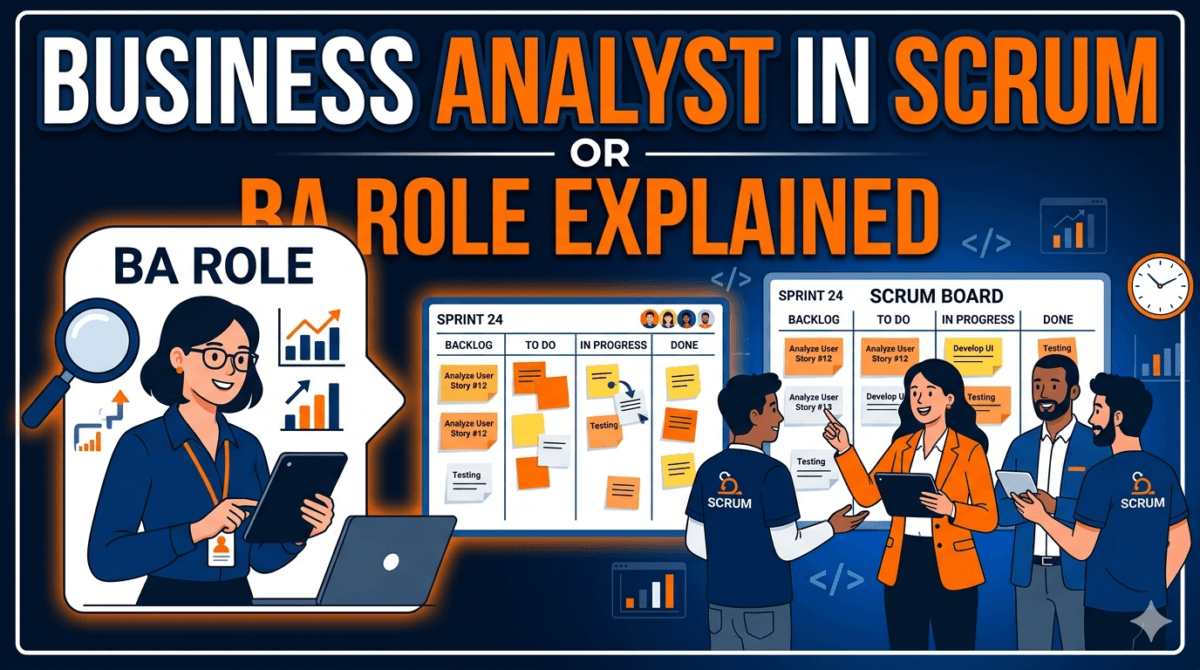
Role of Business Analyst in Agile Scrum: Responsibilities, Skills & Real Project Example
Introduction
Role of Business Analyst in Agile Scrum : Imagine spending six months gathering requirements. The development team builds everything. After the succceful development client says :
“That is not the requirement what we given.”
Now the project is delayed
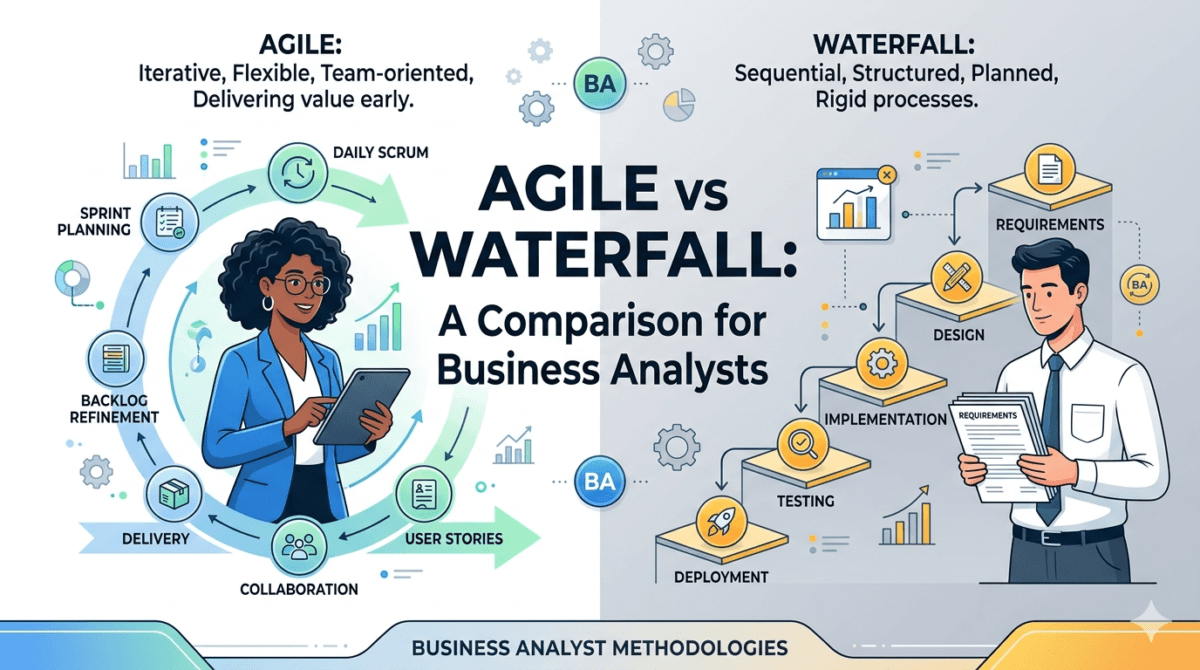
Agile vs Waterfall for Business Analysts: Key Differences, Roles & Real Examples (2026 Guide)
Agile vs Waterfall for Business Analysts: Complete Beginner Guide with Real Examples
Are You Confused Between Agile and Waterfall?
Agile vs Waterfall for Business Analysts – Imagine spending 8 months collecting requirements for a project and just before release the
Agile Ceremonies: Beyond the Checklist for BAs
What if all the things you thought you knew about your role in Agile ceremonies were just the surface of a bigger picture?
Most Business Analysts take part in Agile ceremonies every sprint — daily stand–ups,
Agile Metrics: Measuring BA Impact Effectively
“Forget what you think you know about BA metrics. Most Business Analysts are measuring the wrong things, and this can make their big contributions to Agile success go unnoticed. In this guide, we’ll reveal the
Negotiation Skills for Agile Product Owners
Negotiation skills for Agile Product Owners
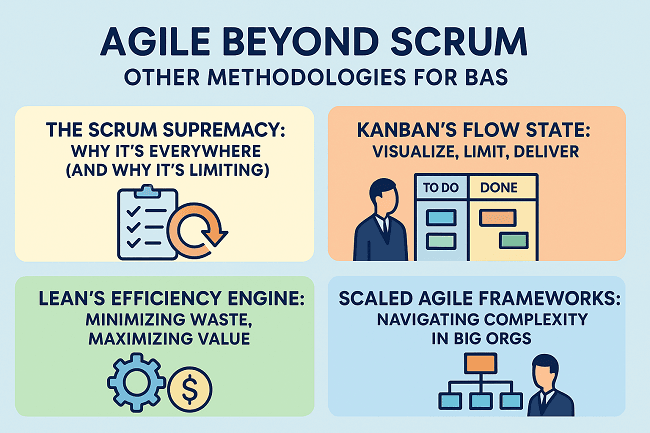
Agile Beyond Scrum: Other Methodologies for BAs
Introduction: Expanding the Agile Horizon
Many Business Analysts (BAs) today work within Scrum frameworks — sprint planning, daily stand-ups, and retrospectives have become part of everyday vocabulary. But Agile is much broader than Scrum. Limiting yourself to one framework can
Agile Thinking: The Mindset Behind Successful Agile Transformation
🚀 Agile Thinking: The Mindset Behind Successful Agile Transformation
🔍 Introduction to Agile Thinking
In the fast-paced world of business, speed, adaptability, and innovation are essential for survival. Agile Thinking is not just a methodology—it’s a mindset that empowers individuals
Agile Leadership: Driving Success in Agile Teams
🔍 Introduction to Agile Leadership
Agile leadership is not about being the boss; it’s about guiding teams with flexibility, empathy, and empowerment. In today’s fast-changing business environment, traditional command-and-control leadership styles are no longer effective. Agile leaders focus on
Agile Business Analysis Techniques – Detailed Guide with Examples
Agile Business Analysis Techniques – Agile Business Analysis focuses on delivering value quickly and efficiently. Unlike traditional models, Agile Business Analysts (Agile BAs) work closely with the development team and stakeholders
Agile vs. Waterfall for Business Analysts: A Comprehensive Comparison
Agile vs. Waterfall for Business Analysts : In the world of software development and project management, two popular methodologies—agile and waterfall—come to the fore. For business analysts, understanding these processes is
Best Practices for Writing User Story: A Comprehensive Guide
User Story Writing Best Practices
User Story Writing Best Practices : User feedback is an important part of agile project management and provides a simple and effective way to capture product requirements. They help bridge the gap between development teams
Agile Methodology for Business Analysts
Agile Methodology for Business Analysts : Agile methodology is a revolutionary software development approach that emphasizes flexibility, collaboration, and customer satisfaction. This is in contrast to traditional methods such as waterfall, where projects are broken
How to Conduct a Standup Meeting: A Comprehensive Guide
Daily Standup Meeting : Standup meetings are a crucial part of Agile project management, fostering communication, collaboration, and alignment within teams. This guide will walk you through how to conduct effective standup meetings and provide tips to enhance their effectiveness.
Mastering the Daily Standup Meeting: A Comprehensive Guide
What is a Daily Standup Meeting?
A Daily Standup Meeting, often referred to simply as a “standup,” is a short, time-boxed meeting where team members quickly discuss their progress, plans, and any obstacles they’re facing. This agile ceremony is crucial
Agile Project Management User Stories : Mastering User Stories
Agile what is an Epic in Agile Methodology
Agile methodology is a popular approach in project management that emphasizes flexibility, collaboration, and customer-centric development. One key component of Agile is the “epic.” In this article, we’ll explore what an epic is, provide examples, and offer guidance on how
Product Owner and Scrum Master can be the same person ? Exploring the Dynamics of Dual Roles in Scrum
In the realm of Agile methodologies, Scrum has emerged as one of the most popular frameworks for iterative product development. Central to the success of Scrum are two key roles: the Product Owner and the Scrum Master. Traditionally, these roles
Business Analyst Role in Agile Projects
Business Analyst Role in Agile Projects : In the dynamic landscape of software development, where adaptability and efficiency are paramount, Agile methodologies have emerged as a beacon of innovation. Agile frameworks promote iterative development, collaboration, and rapid responses to change,
Define Agile Epic: A Comprehensive Guide
Define agile epic : In the realm of Agile project management, the term “epic” holds a significant place. It’s a concept that serves as a cornerstone for breaking down large-scale projects into manageable and actionable components. Understanding what an agile