Get new posts by email:
Powered by follow.it

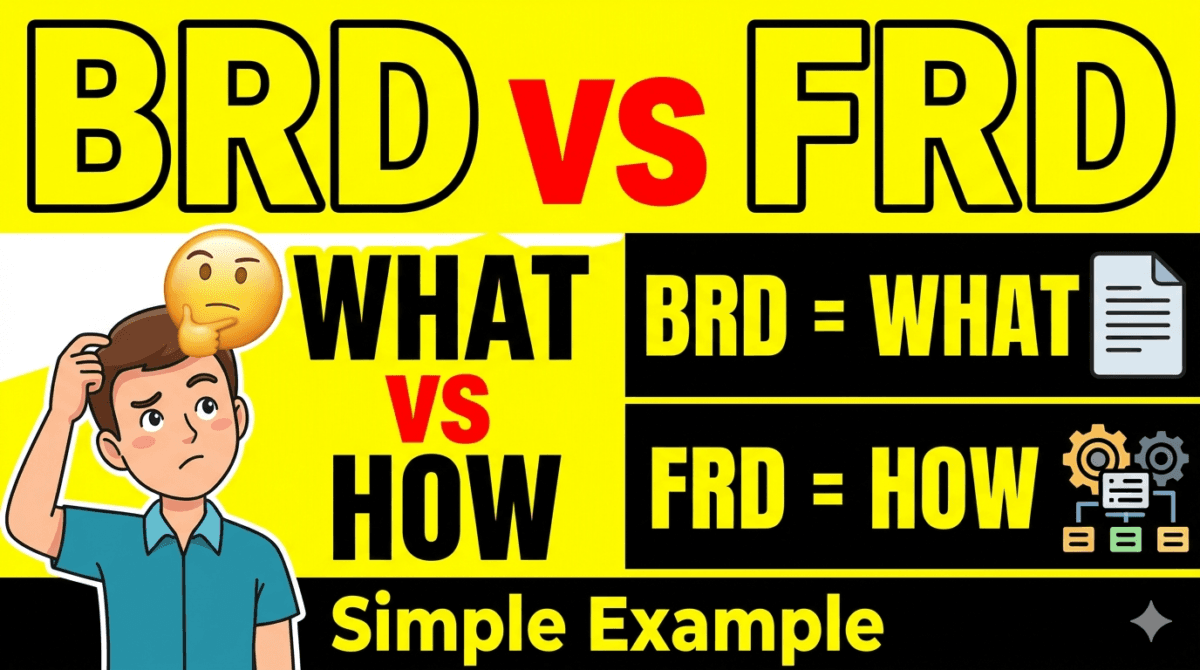
BRD vs FRD Difference with Examples | Business Analyst Guide for Beginners (2026)

BRD vs FRD – Difference with Examples

Many business analyst beginners confuse BRD and FRD. If you are preparing for a business analyst interviews, you must know the difference between BRD and FRD. One document explains what the business needs and the other explains how the system will work.

Many beginners in business analysis get confused between two important documents that is BRD and FRD. Some people even think they are the same document but in real products they serve very different purposes. If you want to become a business analyst or prepare for interviews, you must clearly understand BRD versus FRD.

In this article, I will explain the difference with simple examples. Most people try to remember the difference using definitions but definitions are hard to remember. So in this article, we will understand the difference using a real project example so that you can remember this very easily.
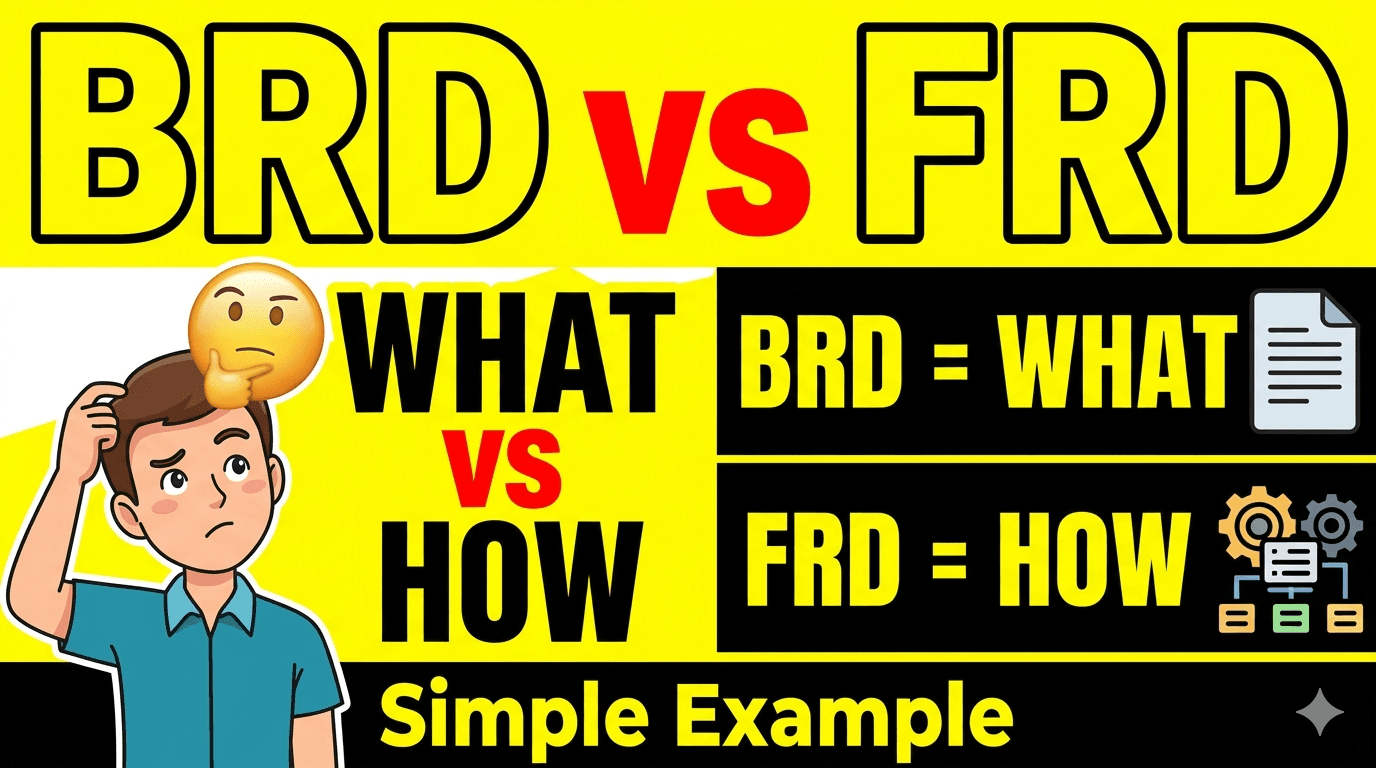
BRD vs FRD difference

Real-Time Example (Food Delivery App)

Imagine a company wants to build a food delivery mobile app. Customer should be able to browse restaurants, place orders, make payments. Here you can imagine Zomato app or Swiggy app.

Before development starts, business analysts prepare two important documents. The first document is BRD and the second document is FRD. But these documents explain different levels of details.


What is BRD?

What is business requirement document? BRD explains business goals, project objectives, high-level requirements.

Example BRD requirement:
The system should allow customers to order food online.

Notice something important here. BRD explains what the business needs. That means what client is expecting or what customer is expecting from the IT company.


What is FRD?

What is FRD? Functional requirement document. FRD explains system functionality, detailed workflows, technical behavior.

Example FRD:
User selects a restaurant, adds food items, proceeds to checkout, payment is processed, order confirmation is generated.

FRD explains how the system will work.


Simple Trick to Remember

Here is a simple trick to remember what is BRD and what is FRD.

What does the business need?
BRD answers what does the business need or what does the business requirement.

FRD answers how will the system implement it.

This is the core difference between BRD and FRD.

BRD vs FRD – Difference with Examples

Many business analyst beginners confuse BRD and FRD. If you are preparing for a business analyst interviews, you must know the difference between BRD and FRD. One document explains what the business needs and the other explains how the system will work.

Many beginners in business analysis get confused between two important documents that is BRD and FRD. Some people even think they are the same document but in real products they serve very different purposes. If you want to become a business analyst or prepare for interviews, you must clearly understand BRD versus FRD.

In this article, I will explain the difference with simple examples. Most people try to remember the difference using definitions but definitions are hard to remember. So in this article, we will understand the difference using a real project example so that you can remember this very easily.


Real-Time Example (Food Delivery App)

Imagine a company wants to build a food delivery mobile app. Customer should be able to browse restaurants, place orders, make payments. Here you can imagine Zomato app or Swiggy app.

Before development starts, business analysts prepare two important documents. The first document is BRD and the second document is FRD. But these documents explain different levels of details.


What is BRD?

What is business requirement document? BRD explains business goals, project objectives, high-level requirements.

Example BRD requirement:
The system should allow customers to order food online.

Notice something important here. BRD explains what the business needs. That means what client is expecting or what customer is expecting from the IT company.


What is FRD?

What is FRD? Functional requirement document. FRD explains system functionality, detailed workflows, technical behavior.

Example FRD:
User selects a restaurant, adds food items, proceeds to checkout, payment is processed, order confirmation is generated.

FRD explains how the system will work.


Simple Trick to Remember

Here is a simple trick to remember what is BRD and what is FRD.

What does the business need?
BRD answers what does the business need or what does the business requirement.

FRD answers how will the system implement it.

This is the core difference between BRD and FRD.


BRD vs FRD Comparison

BRD focus business perspective, audience stakeholders and managers content high-level requirement.

FRD focus system functionality, audience developers and testers content detailed technical requirements.


Another Real-Time Example

Let us compare one requirement

BRD requirement:
The system should allow users to transfer money.

FRD requirement:
User enters account number system validates account user enters amount system checks the balance then transaction completed.

Now you can clearly see the difference between BRD and FRD.


When are BRD and FRD Created?

Then have these these documents created.

BRD is created first. It defines the business need. Sometimes even client will prepare the BRD and they will share with us.

Based on that BRD our BS will prepare the functional specification document or FRD.

FRD is created after the BRD. It explains how developers will build the system.

BRD vs FRD Comparison Table (SEO Optimized)

AspectBRD (Business Requirement Document)FRD (Functional Requirement Document)
DefinitionBRD explains what the business needsFRD explains how the system will work
PurposeDefines business goals and objectivesDefines system functionality and behavior
FocusBusiness perspectiveTechnical/system perspective
Level of DetailHigh-level requirementsDetailed and structured requirements
AudienceStakeholders, clients, managersDevelopers, testers, technical teams
Prepared ByBusiness Analyst / ClientBusiness Analyst / System Analyst
When CreatedCreated first (before development)Created after BRD
Content IncludesBusiness goals, scope, high-level requirementsWorkflows, use cases, functional logic
ExampleThe system should allow customers to order food onlineUser selects restaurant, adds items, makes payment, order confirmed
NatureNon-technicalSemi-technical / technical
UsageUnderstanding business needsSystem design and development
Change FrequencyLess frequently changedMay change based on technical updates
DependencyIndependent documentDepends on BRD
GoalTo define what the client expectsTo define how developers will build the solution

πŸ‘‰ β€œThe above BRD vs FRD comparison table clearly explains the difference between business requirement document and functional requirement document with examples, making it easier for beginners to understand.”


BRD vs FRD Comparison

BRD focus business perspective, audience stakeholders and managers content high-level requirement.

FRD focus system functionality, audience developers and testers content detailed technical requirements.


Another Real-Time Example

Let us compare one requirement

BRD requirement:
The system should allow users to transfer money.

FRD requirement:
User enters account number system validates account user enters amount system checks the balance then transaction completed.

Now you can clearly see the difference between BRD and FRD.


When are BRD and FRD Created?

Then have these these documents created.

BRD is created first. It defines the business need. Sometimes even client will prepare the BRD and they will share with us.

Based on that BRD our BS will prepare the functional specification document or FRD.

FRD is created after the BRD. It explains how developers will build the system.

Β 

Why BRD and FRD are Important?

Understanding the difference between BRD and FRD is an important skill for business analysts because these documents help teams understand requirements clearly, reduce project mistakes, build the correct solution.

If you want to learn more about business analyst skills, BA documentation, BA career roadmap then please visit our website:
πŸ‘‰ https://www.bacareers.in

Related Articles :

FAQ’s

1. What is the main difference between BRD and FRD?

BRD explains what the business needs, while FRD explains how the system will implement those requirements.

2. Who prepares BRD and FRD?

Business analysts usually prepare BRD, and based on that FRD is created for developers and testers.

3. Is BRD created before FRD?

Yes, BRD is created first and FRD is created after BRD.

4. Can BRD and FRD be combined?

In some projects, BRD and FRD can be combined into a single document, but generally they are separate.

5. Why is BRD important?

BRD helps in understanding business goals and ensures the project meets client expectations.

How to Write BRD (Business Requirement Document) Step by Step with Example | BA Guide 2026

How to Write BRD (Business Requirement Document)

Introduction

Hi friends, many software products fail because requirements are not documented properly. If you want to become a business analyst, you must learn how to write a BRD, business requirement document.

Imagine this situation, a company spends million of dollars to build a software, but when the project is completed, the client says this is not what we asked for.

Why does this happen? Because requirements are not documented properly. And that is exactly why business requirement documents BRD are so important.

In this article, I will show you how to write a professional BRD step by step.


How to Write BRD
How to Write BRD

Understanding BRD

Many beginners think writing a BRD is just copying requirements, writing long documents using complex templates. But the truth is a good BRD clearly explains the business problem and solutions.

Let us see how to write business requirement document step by step.


Example Scenario

Let us take a simple example. A bank wants to create a mobile app for customers. Customer should be able to check balance, transfer money and pay bills.

Before developers start coding, the business analyst must create a BRD document explaining the requirements.

Let us see what goes inside that document.


BRD Section 1: Document Overview

The first section includes project name, document version, author, date.

Example:

  • Project name: Mobile Banking Application
  • Version: 1.0
  • Author: Business Analyst

BRD Section 2: Business Objective

This section explains why the project exists.

Example:
To enable customers to perform banking transactions using a mobile application.

This helps everyone understand the business goal.


BRD Section 3: Scope

Scope explains what is included and what is not included.

Example:

  • Included: balance checking, fund transfer and bill payment
  • Not included: loan processing

BRD Section 4: Stakeholders

Stakeholders are people involved in this project.

Example:

  • Business Manager
  • Product Owner
  • Development Team
  • QA Team

This section helps identify who is responsible for decisions.


BRD Section 5: Business Requirements

This is the most important section.

Example Requirements:

  • Requirement 1: The system should allow users to log in using username and password
  • Requirement 2: The system should allow users to transfer funds between accounts

Requirements must be clear, testable and measurable. Always you should keep in mind that the requirement should be clear, testable and measurable.


BRD Section 6: Business Rules

Business rules define restrictions.

Example:
Daily transfer limit 1 lakh per day.


BRD Section 7: Assumptions and Constraints

Example Assumptions:
Users have internet access

Example Constraints:
Project must be completed within 6 months


BRD Section 8: Approval

The final section includes approval from the stakeholders.

Example:

  • Business Manager
  • Product Owner
  • Project Manager

This confirms everyone agrees with the requirements.


Conclusion

Writing a good BRD helps teams understand requirements clearly, reduce project errors, improve project success.

If you want to learn more about business analyst skills, BA interview preparation, BA career roadmap, subscribe to career growth lab.

And if you want sample documents, you can download from the website.

Related ArticlesΒ 

❓ FAQs

1. What is BRD in business analysis?

BRD stands for Business Requirement Document. It explains business needs and project requirements clearly.

2. Why is BRD important?

BRD helps avoid misunderstandings between stakeholders and development teams.

3. What are the key sections in a BRD?

Document overview, business objective, scope, stakeholders, requirements, business rules, assumptions, constraints, and approvals.

4. Who prepares BRD?

A Business Analyst prepares the BRD.

5. What makes a good BRD?

A good BRD is clear, testable, and measurable.

{
  "@context": "https://schema.org",
  "@type": "Article",
  "headline": "How to Write BRD (Business Requirement Document) Step by Step",
  "description": "Learn how to write a BRD with simple steps, examples, and structure. Perfect guide for beginners.",
  "author": {
    "@type": "Person",
    "name": "Business Analyst"
  },
  "publisher": {
    "@type": "Organization",
    "name": "BA Careers",
    "logo": {
      "@type": "ImageObject",
      "url": "https://www.bacareers.in/logo.png"
    }
  },
  "mainEntityOfPage": "https://www.bacareers.in/",
  "articleSection": "Business Analysis",
  "keywords": [
    "BRD",
    "Business Requirement Document",
    "How to write BRD",
    "BRD example",
    "Business Analyst"
  ]
}

FAQ’s

1. What is BRD in business analysis?

BRD stands for Business Requirement Document. It explains business needs and project requirements clearly.

2. Why is BRD important?

BRD helps avoid misunderstandings between stakeholders and development teams.

3. What are the key sections in a BRD?

Document overview, business objective, scope, stakeholders, requirements, business rules, assumptions, constraints, and approvals.

4. Who prepares BRD?

A Business Analyst prepares the BRD.

5. What makes a good BRD?

A good BRD is clear, testable, and measurable.

Business Analyst Career growth Explained: From Junior BA to Product Manager

Business Analyst Career Growth Explained

If you are planning to become a business analyst, you must understand the businessanalyst career growth.

Many people want to become a BA, but one big question always comes up.

  • What happens after you become a BA?

  • What is the career growth for BA?

  • Can we grow in this career path or not?

So let us see what are the roles and what is the career path for business analyst.

Senior roles, product management, and leadership positions are part of this career path.

In this article, I will explain the complete business analyst career path step by step.


business analyst career path

Reality of Business Analyst Career Growth

Most people think the career path looks like this:

Business Analyst β†’ Senior Business Analyst β†’ Done

But the reality is very different.

There are multiple career directions a Business Analyst can grow into.

Let us explore them.


Example Scenario

Let me share a simple example.

Imagine a fresh graduate who joins a company as a Junior Business Analyst.

At the beginning, he works on tasks like:

  • Documenting requirements

  • Assisting senior analysts

  • Attending stakeholder meetings

But as he gains experience, his responsibilities grow and his career path expands into multiple opportunities.


Level 1: Junior Business Analyst (0–2 Years Experience)

Responsibilities

  • Assist senior Business Analysts

  • Document requirements

  • Create simple user stories

  • Participate in meetings

Skills Required

  • Communication

  • Documentation

  • Understanding business needs

This stage is mainly about learning the fundamentals of business analysis.


Level 2: Business Analyst (2–5 Years Experience)

Responsibilities include:

  • Gathering requirements from stakeholders

  • Creating BRD and functional documents

  • Working with developers and testers

  • Analyzing business problems

At this stage, the BA becomes independent and confident.

He handles the requirements end to end, from gathering requirements until delivering the requirement to the client.


Level 3: Senior Business Analyst (5–8 Years Experience)

Responsibilities

  • Lead requirement workshops

  • Manage complex projects

  • Guide junior Business Analysts

  • Work closely with Product Owners

Senior Business Analysts become strategic contributors to the project.


Career Path Direction 1: Product Owner

Some Business Analysts transition into Product Owner roles.

Responsibilities

  • Define product vision

  • Prioritize backlog

  • Work closely with Agile teams

This role focuses on product strategy and decision making.

In upcoming articles, we will cover what Agile is and what teams are involved in Agile meetings.

If you need any clarifications or want to know about any particular topic in Agile, please let us know.


Career Growth Direction 2: Product Manager

Another growth path is Product Management.

Responsibilities

  • Define product roadmap

  • Analyze market needs

  • Drive product growth

This role involves business strategy and innovation.


Career Growth Direction 3: Business Analyst Manager

Some professionals move into leadership roles.

Examples include:

  • BA Manager

  • Head of Business Analysis

Responsibilities

  • Manage BA teams

  • Define analysis standards

  • Guide project strategy


Career Growth Direction 4: Domain Specialist

Some Business Analysts specialize in particular domains like:

  • Banking

  • Healthcare

  • Finance

  • Telecom

  • Insurance

These professionals become domain experts.

In many companies, they are called SMEs (Subject Matter Experts).


Skills Needed to Grow in a BA Career

To grow in the Business Analyst career path, focus on developing these skills:

  • Communication

  • Analytical thinking

  • Stakeholder management

  • Domain knowledge

  • Agile methodology


Final Thoughts

The Business Analyst career path offers many exciting opportunities.

You can grow into:

  • Senior Business Analyst

  • Product Owner

  • Product Manager

  • BA Manager

If you want more articles about:

  • Business Analyst career roadmap

  • Business Analyst salary insights

  • Business Analyst interview preparation

Visit our website:

πŸ‘‰ https://www.bacareers.in

We regularly publish articles explaining Business Analyst careers step by step.

Related Articles :Β 

How to Become a Business Analyst

Business Analyst Skills

Business Analyst Interview Questions

Agile Methodology for Business Analysts

FAQ’s

What is the career path of a Business Analyst?

How long does it take to become a Senior Business Analyst?

Can a Business Analyst become a Product Manager?

What skills are required to grow in a Business Analyst career?

Business Analyst Skills Required for Beginners (Complete Guide with Examples)

Business Analyst Skills Required for Beginners

If you are planning to become a business analyst, there are few critical skills you must learn first.

In this article, let us see what are the skills you must learn to become a business analyst.

We will discuss in detail one by one.

Many people think that to become a business analyst, you must know programming, advanced technology, and complex tools.

But the truth is, some of the most successful business analysts started with zero technical background.

So the real question is:

What skills are actually required to become a business analyst?

In this article, I will explain the most important BA skills beginners must learn with real examples from projects.

Business Analyst skills required for beginners

What Skills Are Required for a Business Analyst?

The most important skills required to become a Business Analyst include:

  1. Communication skills

  2. Requirement gathering

  3. Analytical thinking

  4. Documentation skills

  5. Process modeling

  6. Basic technical understanding

  7. Stakeholder management

  8. Problem solving

These skills help Business Analysts identify business problems and deliver the right technology solutions.


Real Project Example

Let’s imagine a real scenario.

A company wants to build an online shopping mobile app.

In our day-to-day life also we are using online shopping mobile apps like:

  • Flipkart

  • Amazon

Here the requirement is customers should be able to:

  • Browse products

  • Add items to the cart

  • Make payments

But before developers start coding, someone must answer important questions like:

  • What features should the app include?

  • How will customers use the app?

  • What business rules should apply?

This is where the Business Analyst comes in.

But to do the job successfully, the BA needs certain skills.

Let us explore them.


1. Communication Skills

The most important skill for any business analyst is communication.

Because a BA talks with:

  • Stakeholders

  • Developers

  • Testers

  • Product owners

Example:

A manager says:

“We want faster order processing.”

The BA must convert that into clear requirements for development.

Without strong communication skills, products can easily fail.

That means there is a chance for product failure or incorrect implementation.


2. Requirement Gathering Skills

A business analyst must be able to collect and understand business requirements in detail.

This includes:

  • Asking the right questions

  • Conducting stakeholder meetings

  • Documenting business needs

Example Questions a BA May Ask

  • Who will use this feature?

  • What problem are we solving by providing this solution?

  • What should happen if an error occurs?

These skills ensure developers build the correct solution.


3. Analytical Thinking

A BA must analyze problems and find solutions.

Example:

If customers abandon their cart during checkout, the BA might investigate:

  • Is the checkout process too long?

  • Are payment options limited?

  • Is the application slow?

This helps the team improve the system effectively.


4. Documentation Skills

Business analysts create documents like:

  • BRD (Business Requirement Document)

  • User stories

  • Functional specifications

These documents help teams understand project requirements clearly.


5. Process Modeling

Business Analysts often create simple diagrams like:

  • Process flows

  • Workflow diagrams

  • Use case diagrams

Example process:

Customer β†’ Add to Cart β†’ Payment β†’ Order Confirmation

These diagrams help developers visualize the system clearly.

If you want to know more about process flows, workflow diagrams, and use case diagrams, let us know so that I will cover them in the next articles.


6. Basic Technical Understanding

Business Analysts do not need to be programmers.

But they should understand basic concepts like:

  • APIs

  • Databases

  • System workflows

This helps them communicate better with technical teams.


7. Stakeholder Management

Business Analysts must manage different stakeholders.

Example:

  • Marketing team wants more features

  • Developers say the deadline is tight

The BA must balance both and find a practical solution.


8. Problem Solving

Ultimately, Business Analysts are problem solvers.

Their job is to:

  • Identify problems

  • Analyze solutions

  • Help teams build the right product


Related Articles:

  1. How to Become a Business Analyst
  2. Top Business Analyst Skills
  3. Business Analyst Interview Questions
  4. Agile Methodology for Business Analysts

Final Thoughts

If you want to become a Business Analyst, start developing these skills:

  • Communication

  • Requirement gathering

  • Analytical thinking

  • Documentation

  • Process modeling

The good news is these skills can be learned step by step.

If you want more articles about:

  • Business Analyst career roadmap

  • Business Analyst salary insights

  • Business Analyst interview preparation

Visit:

πŸ‘‰ https://www.bacareers.in

On this platform we simplify the Business Analyst career step by step.

FAQ’s

What skills are required to become a Business Analyst?

Some of the most important Business Analyst skills include communication, requirement gathering, analytical thinking, documentation, process modeling, stakeholder management, and problem solving.


Do Business Analysts need coding skills?

No. Business Analysts do not need to write code. However, they should understand basic technical concepts like APIs, databases, and system workflows.


Can non-IT professionals become Business Analysts?

Yes. Many successful Business Analysts come from non-IT backgrounds such as banking, finance, sales, and customer support.


What tools do Business Analysts use?

Common Business Analyst tools include Excel, Jira, Confluence, Visio, and Figma.

Please watch full video here —>

What Does a Business Analyst Do ? Roles, Responsibilities & Real Project Example

What Does a Business Analyst Actually Do?

Business Analyst Roles and Responsibilities in Real Projects

Most people think a Business Analyst just writes documents. But the truth is very different.

Most people think a Business Analyst is someone who writes documentation, works in Excel, and attends meetings. But the truth is very different.

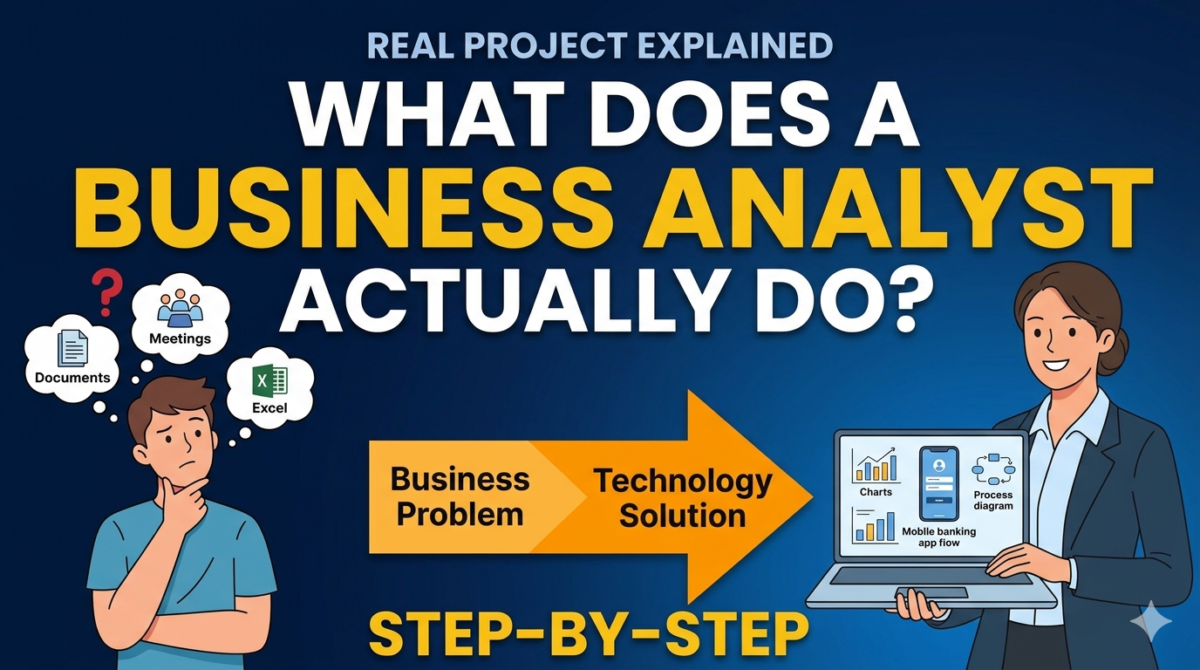
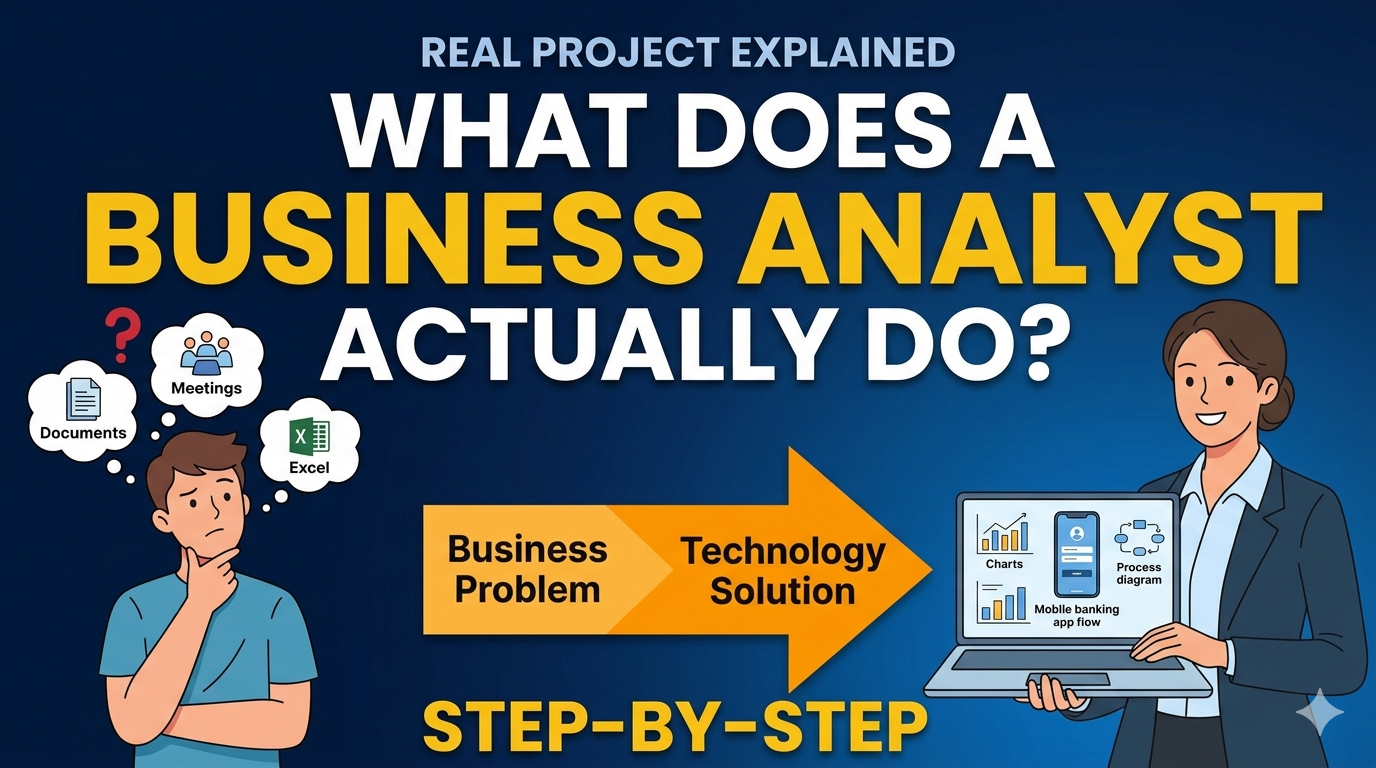
A Business Analyst is the person who connects business problems with technology solutions.

In simple words, they help companies to build the right product.

Today, I will explain what a Business Analyst actually does in real projects.

If you have ever wondered:

  • What does a BA do every day?

  • Does BA need coding?

  • What tools do BA use?

Then this article will give you a complete real-world example with examples.

What does a Business Analyst do

What Does a BA Actually Do?

A BAΒ is a professional who identifies business problems and helps organizations build the right technology solutions.

In real projects, a BA performs the following responsibilities:

  1. Understand the business problem by talking to stakeholders and customers

  2. Gather requirements such as business rules, features, and system needs

  3. Document requirements using BRD, user stories, and functional specifications

  4. Create process flows and diagrams to explain how the system should work

  5. Communicate between business teams and developers

  6. Support testing to ensure the product works as expected

In simple words, a BA connects business needs with technology solutions and ensures the company builds the right product for users.

πŸ’‘ This section is optimized to rank for:

  • Whatdoes a BA do

  • BA roles and responsibilities

  • BAΒ  job explained


Real Project Example

Let’s imagine a real story.

A bank wants to build a mobile app where customers can check balance, transfer money, and pay bills.

But developers cannot start coding immediately because they don’t know:

  • What features are required

  • How users will use the app

  • What the business rules are

This is where the Business Analyst enters the project.


Step 1: BA Understands the Business Problem

The BA talks to stakeholders like:

  • Business managers

  • Customers

  • Product owners

He will ask the right questions to understand exactly what they expect from the system.

Example Question

What problem are we trying to solve?

Example Answer

We want customers to transfer money faster.


Step 2: Gather Requirements

The BA collects detailed requirements like:

  • Transfer limit

  • Security verifications

  • OTP validation

These requirements are documented as:

  • User Stories

  • BRD (Business Requirement Document)

  • Functional Requirements


Step 3: Create Process Flow

The BA creates simple diagrams like:

  • Process flows

  • Wireframes

  • Use cases

If you need clarity on process flows, wireframes, and use cases, please comment in the comment section so that I will cover them in the next article.

Example Process Flow

Customer Login β†’ Enter Amount β†’ OTP Verification β†’ Transfer Complete

Whenever we do any transaction, for example when you are doing a payment transaction, you can observe this process flow.

For example, when you use applications like:

  • GPay

  • PhonePe

You can observe the same flow:

  1. Login to the application

  2. Enter the amount

  3. Receive OTP

  4. Enter OTP

  5. Get confirmation message whether it is success or failure

Business Analysts prepare documentation like this so developers clearly understand what needs to be developed in the system.


Step 4: Communicate Between Teams

One of the most important responsibilities of a BA is communication.

Business people speak business language.

Developers speak technical language.

The BA translates between both teams.


Step 5: Support in Testing

Before the product goes live, the BA verifies whether:

  • Requirements are implemented correctly

  • Features match business expectations

Before releasing to the client, the BA verifies the RTM (Requirement Traceability Matrix).

He also verifies whether the application is working as per the client requirement.

If any issues are found, he will ask the development team to fix them.

In software development, these issues are called defects.


What Does a BA Do Daily?

Typical BA daily tasks include:

Morning

  • Stand-up call or daily meeting

Afternoon

  • Requirement discussions with stakeholders

  • Writing user stories

Evening

  • Working with developers and testers


What Tools Do Business Analysts Use?

Some common BAnalyst tools include:

  • Excel

  • Jira

  • Confluence

  • Visio

  • Figma

Coding is not required for Business Analysts.

A BA does not need to write code.

The main role of the BA is to understand the client requirement and explain it to the development team so they can build the application.


Who Can Become a Business Analyst?

Many professionals successfully switch to BA roles from non-IT backgrounds like:

  • Banking

  • Sales

  • Finance

  • Support roles


Important Skills for Business Analysts

The most important skills are:

  • Communication

  • Problem solving

  • Business understanding

Related Articles :

  1. How to Become a BusinessAnalyst
  2. Top Business Analyst Skills
  3. Business Analyst Interview Questions
  4. Agile Methodology for Business Analysts

Learn More About Business Analyst Career

If you want to learn:

  • How to become a Business Analyst

  • Business Analyst salary in India

  • Business Analyst interview questions

Visit our website:

πŸ‘‰ https://www.bacareers.in

On this website, we explain the Business Analyst career step by step.

Can a Non-IT Person Become a Business Analyst? Reality Explained (Complete Guide)

Can someone with zero IT background become a business analyst? Or is it just another fake career promise on the Internet? In this articleI will show you the real truth based on real industry experience.

Can a Non-IT Person Really Become a Business Analyst?

Can a non IT person really become a business analyst? You might have heard BA needs coding. BA requires IT degree. Only software engineers can become BA.

But here is the reality explained honestly.

Non IT person becoming Business Analyst career transition guide

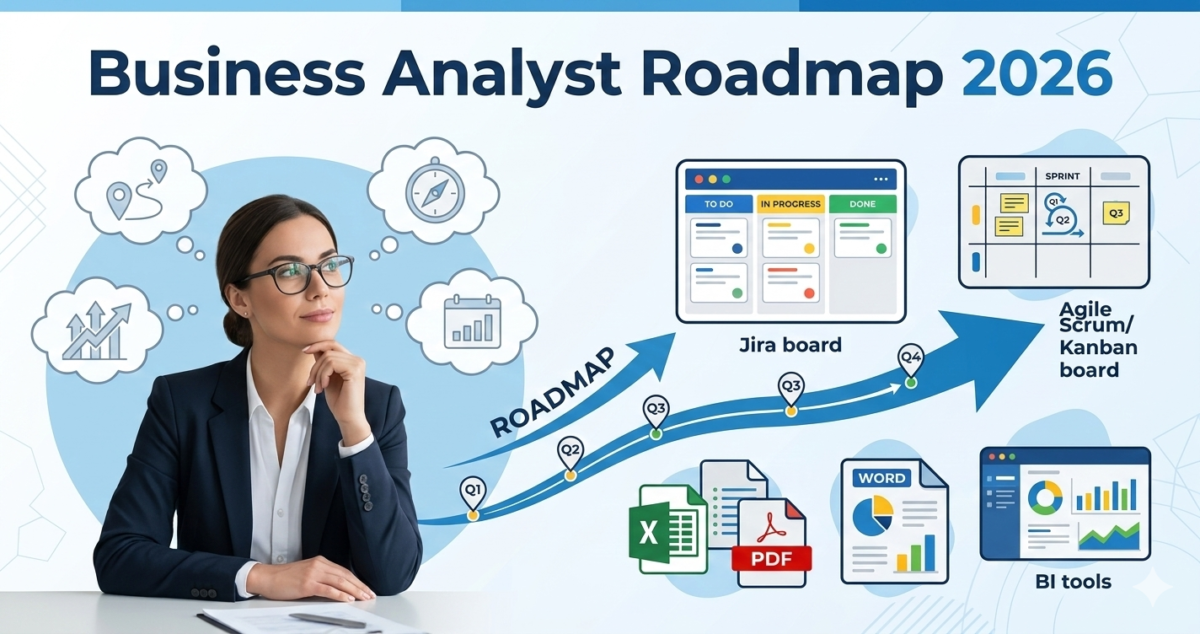
Business Analyst Roadmap 2026 (Complete Beginner Guide)

Business Analyst Without Coding: Step-by-Step Career Guide

Β 

The Truth About the Business Analyst Role

Let us understand something important. A business analyst is not a programmer.

A business analyst is a problem solver between business and technology. This is very important. Actually, the business analyst role is to understand the client requirement and he needs to explain clearly to the developers to deliver this solution.

Roles of a Business Analyst

Here let us understand the roles of business analyst.

Understand business problems.
Talk to the stakeholders.
Talk to the stakeholders, write requirements, help teams build the right solution.

Real-Time Example

Let us try to understand by being the real time example.

Imagine a bank wants to create a mobile app for loans.

Here who will understand customer needs and who will document requirements? Who will explain features to developers?

That person is called business analyst.

He will understand the customer needs. He will document their requirements. He will explain the application features to the developers to develop the application.

Business Analysts from Different Domains

Many successful business analysts come from different domains example banking, finance, HR, sales, customer support and healthcare because they understand business problems deeply.

For example, if the BA is related to banking domain then he can understand the banking related requirements very deeply.

Skills Required to Become a Business Analyst

Here business analyst need not to do any coding but you need to learn some things.

Let us understand what Binas Unist needs to concentrate on fields that is number one.

  • Communication skills
  • Analytical thinking
  • Problem solving
  • Requirement documentation
  • Stakeholder management

What Non-IT People Need to Learn

Non IT people can become business analyst but you still need to learn business analysis fundamentals and agile basics, requirement techniques, tools like Zera and confluence.

Simple Roadmap to Become a Business Analyst

Let us try to understand the road map. Simple road map.

Step one learn BA fundamentals.
Step 2 Understand SDLC and Azile.
Step 3 practice requirement documentation.
Step 4 Create sample projects.
Step 5 Apply for BA and junior BA roles.

Real Career Transitions

I personally know people who moved from different domains to IT, that is BPO to business analyst and banking to business analyst testing to business analyst.

So the transaction is possible if you concentrate on business analyst sales and if you implement the real time scenarios.

Conclusion

If you want a complete step by step road map to become a business analyst, please go through the previos articles or links provided below.

Can a non-IT person become a Business Analyst?

Yes, non-IT professionals can become Business Analysts if they learn business analysis fundamentals, communication skills, requirement documentation, and Agile basics.

People Also Ask

Frequently Asked Questions (FAQs)

1. Can a non-IT person become a Business Analyst?

Yes, a non-IT person can become a Business Analyst. The Business Analyst role mainly focuses on understanding business problems, gathering requirements, and communicating solutions between stakeholders and development teams. Coding knowledge is usually not mandatory for this role.


2. Do Business Analysts need coding skills?

Business Analysts generally do not need coding skills. Their primary responsibility is to understand business requirements and communicate them clearly to the development team. However, having basic technical knowledge can be helpful.


3. What skills are required to become a Business Analyst?

Some of the important skills required to become a Business Analyst include:

  • Communication skills

  • Analytical thinking

  • Problem solving

  • Requirement documentation

  • Stakeholder management

These skills help Business Analysts understand business problems and provide effective solutions.


4. What tools should a beginner Business Analyst learn?

Beginner Business Analysts should learn tools that help in documentation and collaboration. Some commonly used tools include:

  • Jira

  • Confluence

  • Microsoft Excel

  • Microsoft PowerPoint

These tools help manage requirements, track tasks, and communicate project information.


5. What is the roadmap to become a Business Analyst?

A simple roadmap to become a Business Analyst includes the following steps:

  1. Learn Business Analysis fundamentals

  2. Understand SDLC and Agile methodology

  3. Practice requirement documentation

  4. Create sample or practice projects

  5. Apply for Business Analyst or Junior BA roles


6. Can professionals from other domains become Business Analysts?

Yes, professionals from different domains such as banking, finance, HR, sales, customer support, and healthcare can become Business Analysts. Their domain knowledge often helps them understand business requirements more effectively.


7. Is Business Analyst a good career option?

Business Analyst is considered a good career option because organizations need professionals who can bridge the gap between business needs and technology solutions. The demand for skilled Business Analysts continues to grow across many industries.

Β 

https://www.bacareers.in/soft-skills-for-business-analysts/

Agile Methodology for Business Analysts

Business Analyst Career Paths

Β 

How to Become a Business Analyst in IT field

Β 

Β 

Watch the Full Video Explanation

Business Analyst Roadmap 2026 (Complete Beginner Guide)

How to Become a Business Analyst in 2026 – Step by Step Roadmap

Hi friends, do you want to become a Business Analyst in 2026 but don’t know where to start? Business Analyst Roadmap 2026.Β 

Are you confused about skills, certifications, tools, Agile, SQL or whether coding is required to become a business analyst?

In this article we will give you a complete step by step Business Analyst roadmap for 2026, whether you are a fresher or a non-IT professional or already working in IT.

Read till the end because we will also share what not to waste time on, and we will share the important sample documents related to BRD, FRD and Use Case diagrams.

We will share the sample documents at the end and we will also provide answers to important FAQs. On this channel and website we help you build a successful career in Business Analysis with practical guidance, real world examples and structured roadmaps.

Let us break this roadmap into six clear steps.


Step 1: Understand What a Business Analyst Really Does

First, we need to understand that a Business Analyst is not a coder. That means a Business Analyst will not do coding always. It is better to have knowledge of coding, but it is not mandatory for a Business Analyst.

A Business Analyst acts as a bridge between business stakeholders and the technical teams.

That means a Business Analyst understands the business requirements, exactly what requirement is given by the business, and explains that requirement clearly to the internal technical teams.

Here let us understand on which areas we need to concentrate to become a Business Analyst.

Core competencies or core responsibilities of a Business Analyst include:

  • Requirements gathering

  • Writing BRD & FRD

  • Creating user stories

  • Stakeholder communication

  • Process modelling

  • Supporting UAT

Don’t worry about all these terms. We will share the website links where all relevant articles are covered. These articles explain:

  • how to gather requirements

  • how to write BRD and FRD

  • how to create user stories successfully

  • how to do process modelling

  • how to support during UAT

This is Step 1.


Step 2: Learn Business Analysis Concepts

In Step 2, you need to concentrate on Business Analysis concepts.

Here you need to learn about:

  • SDLC

  • Agile

  • Scrum

  • Requirement types

  • Use cases

  • User stories

  • Acceptance criteria

You need to understand and learn these terms clearly.

Documentation skills are also very important because the primary role of a Business Analyst is preparing documents.

A Business Analyst prepares important documents such as:

  • BRD – Business Requirement Document

  • FRD – Functional Requirement Document

  • User Stories

  • RTM – Requirement Traceability Matrix


Tools Business Analysts Need to Learn

Business Analysts should learn some basic tools.

Important tools include:

  • Jira

  • Confluence

  • MS Excel

  • PowerPoint

  • Basic SQL

You need to learn only basic SQL, such as:

  • how to write SELECT queries

  • how to write UPDATE queries

  • how to write DELETE queries

That is more than enough, and it is always good to have knowledge of SQL.


Step 3: Learn Agile Methodology

Now most companies are working on Agile methodology.

So you need to understand and learn about Agile concepts such as:

  • Scrum roles

  • Sprint planning

  • Product backlog

  • Backlog grooming

  • Story estimation

  • UAT support

Understanding Agile is very important for Business Analysts.


Step 4: Build Real Time Projects

This is where most people fail.

Just watching videos will not give practical knowledge. You need to practice creating documents and understanding how to apply the concepts.

Once you understand how to create documents, take sample requirements and try to prepare documents yourself.

If you need sample requirements or sample documents, we can share them.

Here are some practice ideas:

  • Prepare a sample BRD for an e-commerce application

  • Create user stories for a banking application

  • Create a process flow diagram for a hospital system

For example, in a hospital system you can create a workflow starting from patient onboarding until patient discharge.

You can also create a Jira board for practice.


Step 5: Business Analyst Certifications

Certifications are not mandatory, but they can help your career.

If you are interested in certifications, you can consider the following:

  • ECBA – for beginners

  • CCBA – for mid-level professionals

  • CBAP – for experienced professionals

Certifications can help, but skills matter more.


Step 6: Prepare Resume and Start Applying for Jobs

Once you complete the learning process, prepare your resume and start applying for jobs.

Try to apply for at least 5 to 10 jobs per day.

Do not use the same resume for every job. Based on the job description, modify your resume before applying.

You can target roles such as:

  • Junior Business Analyst

  • Business Analyst

  • Functional Consultant

  • Product Analyst

In some companies, Business Analysts are also called Functional Consultants or Product Analysts.

Popular job portals include:

  • Indeed

  • LinkedIn

  • Naukri


What Not to Do in 2026

Now we discussed what to do. Let us also understand what not to do.

  • Do not spend too much time learning coding deeply

  • Do not collect too many certifications

  • Do not wait until you feel 100% ready

  • Do not ignore communication skills


90 Day Action Plan to Become a Business Analyst

Here is a quick 90-day action plan.

Month 1

Focus on Business Analyst fundamentals and practice documentation.

Month 2

Learn Agile methodology and tools, and build two practice projects.

Month 3

Prepare your resume and start applying for jobs.


Final Thoughts

Becoming a Business Analyst in 2026 is absolutely achievable if you follow a structured roadmap.

You do not need luck. You need clarity, consistency, and execution.

If this roadmap helped you, comment β€œRoadmap 2026” and follow for more structured career guidance.

As mentioned earlier, we are also providing useful links in the description to learn more about:

  • Agile

  • Business Analysis skills

  • How to become a Business Analyst

If you are interested, you can go through those resources to improve your knowledge and skills.

If you have any doubts or clarifications, feel free to mention them in the comments so they can be addressed in the next article or video.

Learn more about Agile for Business Analysts

https://www.bacareers.in/agile-methodology-for-business-analysts/

Learn Business Analyst skills

https://www.bacareers.in/soft-skills-for-business-analysts/

How to become a Business Analyst

https://www.bacareers.in/how-to-become-a-business-analyst/

Requirement elicitation techniques

https://www.bacareers.in/effective-requirement-elicitation-techniques/

Is coding required to become a Business Analyst?

No. Coding is not mandatory for Business Analysts. The role mainly focuses on requirement gathering, communication with stakeholders, documentation, and supporting development teams.

Can non-IT professionals become Business Analysts?

Yes. Many professionals from finance, HR, operations, and customer support transition into Business Analyst roles.

What tools should a Business Analyst learn?

Common tools include Excel, Jira, Confluence, PowerPoint, Lucidchart, Visio, and basic SQL.

What is the career path for Business Analysts?

A typical path is Junior Business Analyst β†’ Business Analyst β†’ Senior Business Analyst β†’ Product Owner β†’ Product Manager.

Β 

Is coding required to become a Business Analyst?

No. Coding is not mandatory for Business Analysts. The role mainly focuses on requirement gathering, communication with stakeholders, documentation, and supporting development teams.

Can non-IT professionals become Business Analysts?

Yes. Many professionals from finance, HR, operations, and customer support transition into Business Analyst roles.

What tools should a Business Analyst learn?

Common tools include Excel, Jira, Confluence, PowerPoint, Lucidchart, Visio, and basic SQL.

What is the career path for Business Analysts?

A typical path is Junior Business Analyst β†’ Business Analyst β†’ Senior Business Analyst β†’ Product Owner β†’ Product Manager.

Business Analyst Without Coding: Step-by-Step Career Guide

How to Become a Business Analyst Without Coding

Hi friends, in this article let us see how to become a business analyst without coding.

Most people believe you need coding to enter the IT industry. But what if I told you that one of the highest demand IT careers does not require coding at all?

Thousands of professionals from finance, HR, operations and even non technical backgrounds are already doing it.

That career is called Business Analyst.

Are you from a non technical background and wondering if becoming a business analyst is possible for you?

Then the answer is yes.

And in this article I will show you the exact step by step roadmap to become a business analyst without coding skills or coding knowledge.

Β 


Why Coding is Not Required for Business Analysts

Many people want to move into the IT industry but stop themselves because they think:

  • I don’t know programming

  • I come from non technical background

  • I can’t learn coding

But here is the truth.

A business analyst is not hired for coding skills. They are hired for understanding business problems and finding solutions.

A business analyst acts as a bridge between business teams and technical teams.

  • Business teams explain the problem

  • Developers build the solutions

  • The business analyst ensures both sides clearly understand the requirement


Real World Example of a Business Analyst Role

Let us imagine a simple example.

An online shopping company wants customers to track their orders.

The business team says customers keep calling support asking where their order is.

So what the business wants is an order tracking feature.

But developers cannot build the feature immediately because they need clear requirements. Based on a single line statement they cannot start development.

This is where the Business Analyst comes in.

The BA talks to stakeholders and understands the problem or requirement and documents the requirements and writes user stories.

Then the developers can build their feature based on the documents provided by the Business Analyst.

Note something interesting here.

The business analyst did not write a single line of code.

He prepared the documents and the user stories.


What is a Business Analyst

First, try to understand the role of a business analyst.

A business analyst helps organizations solve problems by analysing business needs and translating them into requirements for development teams.

Typical responsibilities include:

  • Gathering requirements

  • Talking with stakeholders

  • Analysing business processes

  • Documenting requirements

  • Writing user stories

  • Supporting agile teams

Notice something important here.

None of these responsibilities require coding.


Role of a Business Analyst

A business analyst acts as a bridge between business stakeholders and developers.

Business teams know what problem needs to be solved.

Developers know how to build the solution.

The business analyst ensures both sides clearly understand each other.

Example:

The business team says we want customers to track their orders.

The business analyst converts this idea into detailed requirements for developers.


Learn Core Business Analyst Skills

Instead of coding, a business analyst should focus on building core business analysis skills.

Important skills include:

  • Requirement gathering

  • Stakeholder communication

  • Process analysis

  • Documentation

  • Problem solving

You should also understand important business concepts like:

  • BRD (Business Requirement Document)

  • FRD (Functional Requirement Document)

  • User Stories

  • Acceptance Criteria

  • Agile Methodology


Core Skills Required for Business Analysts

To become a successful business analyst, you need:

  • Strong analytical thinking

  • Communication skills

  • Documentation ability

Example:

Imagine a company is losing customers on their website.

A business analyst analyses the situation and discovers that the checkout process is too complicated.

By simplifying the checkout process, the company improves customer experience.

This is the type of problem solving business analysts do every day.


Learn Basic Business Analyst Tools

You don’t need programming languages, but you should learn some important business analyst tools.

Common tools include:

  • Excel

  • PowerPoint

  • Jira

  • Confluence

  • Lucidchart

  • draw.io

  • Visio

Business analysts use tools to manage requirements and communicate with teams.

Examples of tool usage:

  • Excel for data analysis

  • PowerPoint for presenting requirements

  • Jira for managing agile tasks

  • Confluence for documentation

  • Lucidchart for process diagrams

Example:

In Jira, business analysts create user stories that developers use to build features.


Business Analyst Process

Business analysts follow a structured process to analyse business problems.

Typical process:

  1. Understand the problem

  2. Gather requirements

  3. Analyse requirements

  4. Document requirements

  5. Support development and testing

Example:

A bank wants to launch an online loan application system.

The business analyst will:

  • Talk to customers

  • Understand loan rules

  • Document requirements

  • Help developers build the system


Requirement Gathering

Requirement gathering means collecting information from stakeholders to understand their needs.

Common techniques include:

  • Interviews

  • Workshops

  • Surveys

  • Observation

Business analysts use these techniques to capture requirements.

Example:

A hospital wants to build a patient management system.

The business analyst interacts with doctors and hospital staff to understand required features.

Example requirements include:

  • Patient registration

  • Appointment booking

  • Medical records


Writing User Stories

One of the most important tasks of a business analyst is writing user stories.

A simple user story format is:

As a user, I want this feature so that I can get this benefit.

Example:

As a customer, I want to track my order so that I know when my package will arrive.

This helps developers clearly understand what feature they need to build.


Build Practical Knowledge

To become a business analyst, practice with sample projects.

Example projects include:

  • Online shopping system

  • Banking application

  • Hospital management system

  • Food delivery application

Example for an online shopping system:

You can write requirements for:

  • Product search

  • Add to cart

  • Checkout

  • Order tracking


Create a Strong Resume

Your resume should highlight:

  • Analytical skills

  • Business understanding

  • Documentation experience

  • Communication skills

Example:

Instead of writing:

Worked in operations

Write:

Analysed business processes and documented workflow improvements.

You can also use these keywords in your resume:

  • Requirement analysis

  • Stakeholder communication

  • Process improvement

  • Documentation

Even if you come from finance, HR or operations, you can transition into business analyst roles.


Start Applying for Jobs

You can apply for entry level roles such as:

  • Junior Business Analyst

  • Business Analyst Trainee

  • Functional Analyst

  • Business Analyst Associate

Many companies hire candidates without coding experience.


Business Analyst Career Growth Path

Business analysts have excellent career growth opportunities.

Typical career path:

  1. Junior Business Analyst

  2. Business Analyst

  3. Senior Business Analyst

  4. Product Owner

  5. Product Manager

Many experienced business analysts eventually move into product management roles, where they lead entire products.


Final Thoughts

If you are from a non technical background and want to enter the IT industry, becoming a Business Analyst is one of the best options.

You don’t need coding.

You need:

  • Analytical thinking

  • Communication skills

  • Business understanding

If you want more articles about business analyst careers, IT career growth and high paying non coding jobs, make sure to follow BA Careers and start building your dream career today.

Learn more about Business Analyst skills here:
https://www.bacareers.in/soft-skills-for-business-analysts/

Understand Agile methodology for Business Analysts:
https://www.bacareers.in/agile-methodology-for-business-analysts/

If you want to become a Business Analyst, read this guide:
https://www.bacareers.in/how-to-become-a-business-analyst/

FAQ

Can I become a Business Analyst without coding?

Yes. Business Analysts focus on understanding business problems, gathering requirements and communicating with development teams. Coding is usually not required.

Is Business Analyst a good career for non technical people?

Yes. Many professionals from finance, HR, operations and marketing successfully transition into Business Analyst roles.

What skills are required for Business Analysts?

Important skills include requirement gathering, communication, analytical thinking, documentation and understanding business processes.

Β 

error

Enjoy this blog? Please spread the word :)