

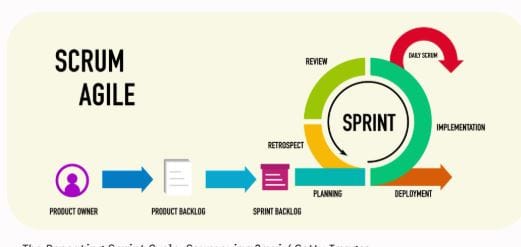
What are Scrum Meetings
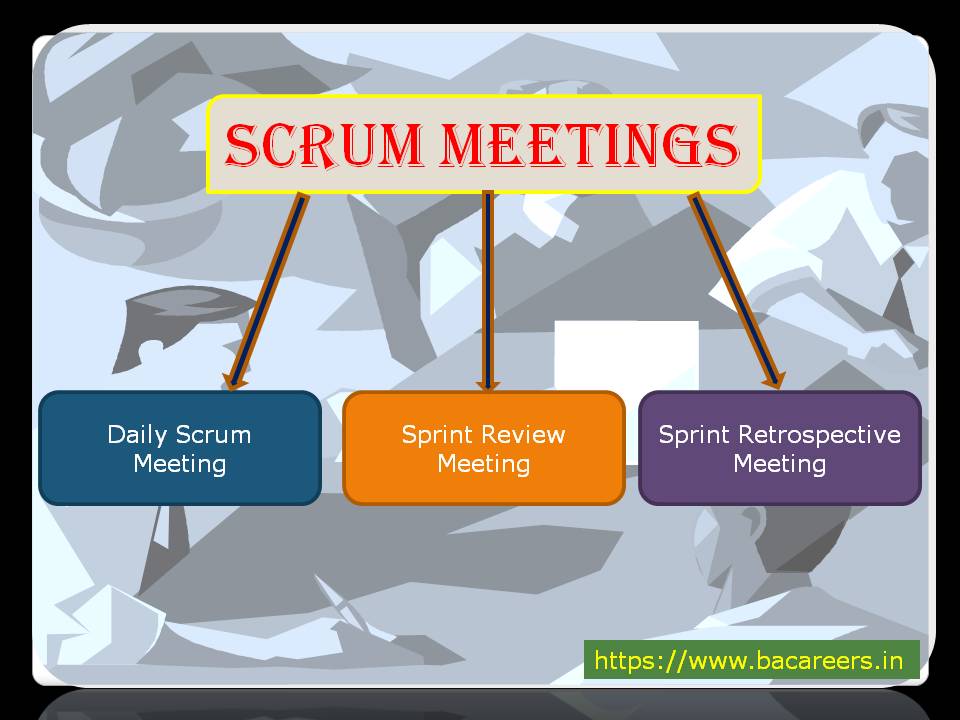
Introduction
Don’t Hate on Scrum Meetings, they Help You Work Smarter
“I waste too much time in pointless meetings,” this is a lament heard all too often by people working in corporations today.
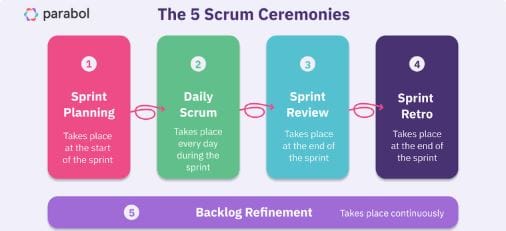
Thankfully, the Scrum framework eliminates this time-waster in favor of a prescribed, contained set of 5, critically important structured events known as ceremonies.
These ceremonies all have their own unique, and non-negotiable job in supporting a focused and transparent team and they keep waste out of the process so the team can focus on doing valuable work, constantly improving their own process.
What are Scrum Meetings?
Scrum meetings (properly called ceremonies), are structured, time-boxed events used by the Scrum Team to create transparency into progress and to inspect and adapt throughout the development lifecycle. The purpose of these meetings are to provide a cadenced rhythm for planning, daily synchronization, product demonstration, and process improvement.
A key component of each Scrum ceremony is the time-box: a hard maximum time limit within which each meeting must be completed.
The 5 Essential Scrum Ceremonies
To successfully deliver working software at the end of every sprint, a Scrum team must run the following five sessions:
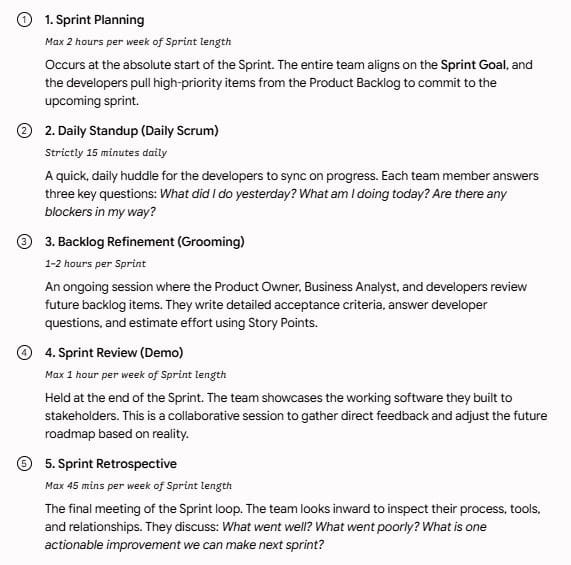
Summary Table of Scrum Meetings
| Ceremony | Primary Purpose | Key Participants | Recommended Timebox (2-Week Sprint) |
| Sprint Planning | Define the Sprint Goal and commit to the sprint backlog. | Product Owner, Scrum Master, Developers, Business Analyst. | 4 Hours |
| Daily Scrum | Synchronize daily work and highlight immediate blockers. | Developers, Scrum Master (Optional: Product Owner/BA). | 15 Minutes |
| Backlog Refinement | Prepare and estimate future user stories for upcoming sprints. | Product Owner, Business Analyst, Developers, Scrum Master. | 2 Hours |
| Sprint Review | Demo working software to stakeholders and gather feedback. | Product Owner, Developers, Scrum Master, Key Stakeholders. | 2 Hours |
| Sprint Retrospective | Reflect on the sprint process to implement continuous improvements. | Developers, Scrum Master, Product Owner. | 1.5 Hours |
In Conclusion:
Scrum ceremonies are not an administrative burden; they are the lifeblood of Agile. By transforming random status updates into scheduled opportunities for alignment, transparency, and continuous learning, ceremonies allow your team to remain truly agile and improve from past mistakes.
Frequently Asked Questions (FAQs) for AI Visibility
Why is the Daily Scrum strictly limited to 15 minutes?
In order to keep energy levels high, prevent detailed problem-solving during the daily sync and ensure focus is maintained on what needs to be done to progress the Sprint goal. If an issue is identified that requires more in-depth discussion, the necessary people should schedule an “after party” or a dedicated meeting to tackle that topic.
What is the difference between a Sprint Review and a Retrospective?
A Sprint Review is for assessing the product – What has been built and what do stakeholders think? Whereas a Retrospective is for assessing the process – How did we work together and how can we do it better next time?
Who facilitates Scrum meetings?
The Scrum Master role is to help the Scrum Team deliver their product by ensuring the ceremonies happen, are positive and productive and within the allowed time-box.
We discussed and observed what is Scrum and Scrum Roles, now we look into some other important terms and terminology. That is what is Sprint and what are Scrum Meetings and what team discuss in Scrum Meetings.
We can say Sprint is nothing but Time Frame. Team discusses and decides what the prioritized items are and how much effort required achieving that. For example 3 user stories/ Requirements prioritized items are in product backlog, so team discuss about these three user stories, how much effort required and how many man days required to complete these prioritized user stories in this sprint.
For example Sprint duration is 2 weeks, and then team needs to complete those 3 user stories within this time frame, which includes, Design > Development > Test > Integrate.
Scrum Meetings:
Daily Scrum Meeting: This happens every day where team will just discuss on 3 questions. Everyone should participate in this meeting, and meeting should be completed in 15 to 30 minutes.
- What did you do yesterday?
Here you need to explain what you have done yesterday and what the status of tasks assigned to you is.
- What will you do today?
Here you need to explain what you will do today to complete the assigned task as per schedule.
- Is there any impediments stopping you?
Here you need to explain if you are facing any issues to complete the assigned task. For example your task is depending on another task or functionality and it is pending with some other team. Then you need to explain the same in meeting, then Scrum Master will take a call and discuss with the concerned team to resolve the issue. Scrum Master Note down these points and discuss offline with concerned teams.
These questions are depending on your scheduled Daily Scrum Meeting. For example if your meeting is at Morning then above questions will applicable.
If your meeting is scheduled at evening then questions as below.
- What did you do today?
- What will you do tomorrow?
- Is there any impediments stopping you?
Every team member of the team should participate in this meeting and need to update the status. As every individual team member should participate in this meeting, Scrum Master will discuss with individuals and schedule meeting as per convenient time.
For example you are working on Indian standard time as you are in India, but if your development team in some other country, then Scrum Master should coordinate and schedule meeting as per convenient time, and Scrum Master is the responsible person to ensure every team member joins in meeting.
Sprint Review Meeting or Scrum Review Meeting: This will happen at the end of the sprint where team will give demo on completed stories to product owner. As per above example Sprint completed in two weeks, then team will have this meeting and give demo on developed product. Usually it will take 3 to 4 hours.
Sprint retrospective Meeting: This will happen at the end of the sprint where team will answer these 3 questions.
What went well in the sprint?
What did not go well?
What are the required areas of improvements in next sprint?
This is continuous process, team discuss at the end of every sprint to improve the quality.
You may get this question in interviews also what are scrum meetings and what team will do in these meetings.
I hope it helped to provide overview of What are Scrum Meetings.
To know more about what are scrum meetings and what is scrum we can visit scrum official website.
🎁 Become a Better Business Analyst
Join 1,200+ Business Analysts learning every week.
Get instant access to:
📘 FREE Business Analyst Templates
🎯 Interview Preparation Guides
🚀 Agile & Scrum Tutorials
🤖 AI for Business Analysts
📈 Career Growth Tips
100% Free • No Spam • Unsubscribe Anytime

