

Get new posts by email:
Powered by follow.it

Role of Business Analyst in Agile Scrum – Responsibilities, Examples & Real Story

Role of Business Analyst in Agile Scrum

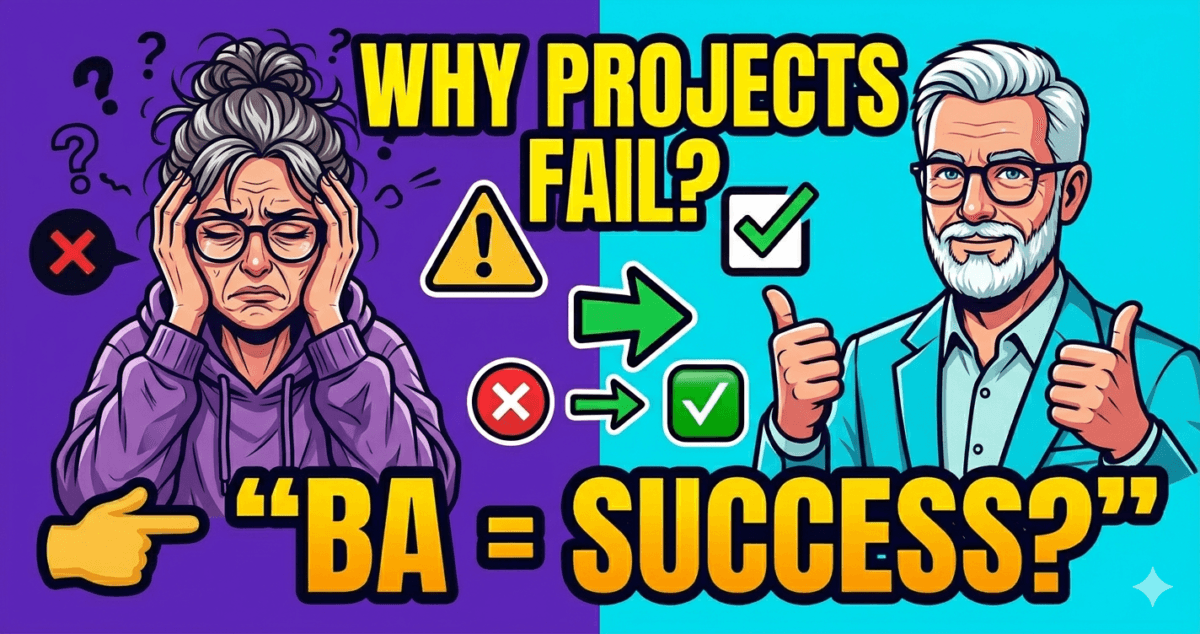
Have you ever seen a Scrum team working fast… delivering every sprint…
but still the client says…
πŸ‘‰ β€˜This is NOT what I wanted!’ 😳

So… what went wrong?

Β 

The answer is simple…
❌ No proper Business Analyst involvement!

In Agile Scrum, many people think Business Analysts are NOT needed…

But here’s the truth:
πŸ‘‰ A strong Business Analyst is the difference between
βœ… a successful product
❌ and a complete disaster.

role of business analyst in agile scrum

A Real Story from Agile Projects

Let me tell you a quick story…

A company followed Scrum perfectly:
βœ” Daily standups
βœ” Sprint planning
βœ” Reviews

But after 4 sprints…
πŸ‘‰ The product FAILED.

WHY?
πŸ‘‰ Requirements were misunderstood.


1. Role of BA in Agile Scrum

Business Analyst acts as a bridge between:
πŸ‘‰ Stakeholders
πŸ‘‰ Product Owner
πŸ‘‰ Development Team

Key responsibilities:

  • Requirement gathering
  • User story writing
  • Clarifying requirements
  • Supporting sprint planning

πŸ‘‰ Pattern interrupt:
β€œWait… isn’t that Product Owner’s job?”

Answer: β€œPartially YES… but BA supports deeply!”


2. BA vs Product Owner

Product OwnerBusiness Analyst
Owns product visionClarifies requirements
Prioritizes backlogWrites detailed user stories
Stakeholder decisionsRequirement analysis

πŸ‘‰ Example:
PO says: β€œBuild login feature”
BA says: β€œWhat type? OTP? Social login? Security rules?”


3. BA Responsibilities in Scrum Ceremonies

  • Sprint Planning β†’ clarifies stories
  • Daily Standup β†’ resolves blockers
  • Sprint Review β†’ validates output
  • Retrospective β†’ suggests improvements

Without BA… meetings become confusion sessions!


4. Real Example

Imagine building a food delivery app…

Without BA:
❌ Wrong features
❌ Confusion

With BA:
βœ… Clear user stories
βœ… Better UX
βœ… Happy customer


Conclusion

So next time someone says…
πŸ‘‰ β€˜BA is not needed in Agile’

You know the truth…

πŸ‘‰ BA is the backbone of successful Scrum projects.

Related ArticlesΒ 

  1. Business Analyst Career Path
  2. Agile Methodology for Business Analysts
  3. How to Write User Stories
  4. BA Interview Questions

Β 

Frequently Asked Questions (FAQs)

What is the role of a Business Analyst in Agile Scrum?

A Business Analyst in Agile Scrum acts as a bridge between stakeholders, Product Owner, and the development team. They ensure requirements are clear, write user stories, and help deliver the right product.

Why is a Business Analyst important in Agile projects?

A Business Analyst is important because they prevent misunderstandings in requirements. Without a BA, Agile teams may deliver quickly but build the wrong product.

Is Business Analyst required in Scrum team?

Yes, a Business Analyst is often required in Scrum teams, especially in complex projects, to ensure clarity in requirements and smooth communication between stakeholders and developers.

What does a Business Analyst do in Scrum ceremonies?

A Business Analyst participates in Sprint Planning, Daily Standups, Sprint Review, and Retrospective to clarify requirements, resolve issues, and validate deliverables.

What is the difference between Product Owner and Business Analyst in Agile?

The Product Owner focuses on product vision and backlog prioritization, while the Business Analyst focuses on detailed requirements, user stories, and requirement clarity.

Why do Scrum projects fail without a Business Analyst?

Scrum projects fail without a Business Analyst due to unclear requirements, miscommunication, and lack of proper requirement analysis.

Business Analyst Roles and Responsibilities in IT Projects (With Real Examples)

Business Analyst Roles and Responsibilities in IT Projects

Have you ever seen an IT project fail… not because of coding… but because the requirements were wrong?

Imagine a company spends 6 months building a product… and the client says…
πŸ‘‰ β€œThis is NOT what I wanted!” 😳

Shocking, right? But this happens more often than you think.

πŸ‘‰ The real question is… who is responsible for preventing this?

Not the developer. Not even the project manager…

πŸ‘‰ It’s the Business Analyst.

In one real project… a company lost nearly β‚Ή1.5 Crores… because one requirement was misunderstood.

The team built everything perfectly… but for the WRONG need.

If a Business Analyst had asked the right questions… this disaster could have been avoided.

πŸ‘‰ So what exactly does a Business Analyst do in IT projects?

Business Analyst Roles and Responsibilities in IT Projects (With Real Examples)

What is a Business Analyst?

A Business Analyst is the bridge between Business and IT.

πŸ‘‰ Business says: β€œWe need growth”
πŸ‘‰ IT says: β€œTell us what to build”

πŸ‘‰ The BA connects both worlds.


Core Roles and Responsibilities of a Business Analyst

1. Requirements Gathering & Analysis

BA talks to stakeholders and understands the real problem.

πŸ’‘ Example:
Client says: β€œWe need a mobile app”
BA asks: β€œWhy?”
πŸ‘‰ Real need: Increase customer engagement


2. Stakeholder Communication

BA ensures everyone is aligned β€” business, developers, testers.

πŸ’‘ Example:
Avoids confusion like:
❌ Business: β€œSimple feature”
❌ Developer: β€œComplex logic”


3. Process Modeling & Documentation

BA creates documents like BRD, FRD, User Stories.

πŸ’‘ Example:
Flowcharts, diagrams, user journeys


4. Solution Evaluation

BA checks if the solution actually solves the business problem.

πŸ’‘ Example:
Is the app improving sales? Or just adding features?


5. Project Support & Validation

BA supports testing and ensures requirements are met.

πŸ’‘ Example:
Validates: β€œIs this what client asked?”


Skills Required for a Business Analyst

Top skills every BA must have:

βœ” Communication
βœ” Analytical thinking
βœ” Problem-solving
βœ” Domain knowledge
βœ” Documentation skills

πŸ‘‰ Remember β€” tools don’t make a BA successful… thinking does.


Why Business Analyst is Important in IT Projects

When a BA does their job right…

βœ” Projects succeed faster
βœ” Costs reduce
βœ” Clients are happy
βœ” Teams avoid rework

πŸ‘‰ BA is not just a role… it’s the backbone of successful IT projects.


Conclusion

So next time you see a successful project… remember…
πŸ‘‰ there’s a Business Analyst behind it.

πŸ’¬ Are you planning to become a Business Analyst?
Comment below: β€œYES BA”

Related ArticlesΒ 

How to Become a Business Analyst

Agile Methodology for Business Analysts

Business Analysis Case Studies

Business Analyst Skills

FAQ’S

πŸ”Ή 1. What are the roles and responsibilities of a Business Analyst in IT projects?

A Business Analyst is responsible for gathering requirements, analyzing business needs, communicating with stakeholders, creating documentation, evaluating solutions, and supporting project delivery.

πŸ”Ή 2. Why do IT projects fail without a Business Analyst?

IT projects often fail due to unclear or incorrect requirements. A Business Analyst ensures that the right requirements are understood and implemented, reducing risks and failures.

πŸ”Ή 3. What is the main role of a Business Analyst?

The main role of a Business Analyst is to act as a bridge between business stakeholders and IT teams to ensure the right solution is built.

πŸ”Ή 4. What skills are required to become a Business Analyst?

Key skills include communication, analytical thinking, problem-solving, stakeholder management, and documentation skills.

πŸ”Ή 5. What does a Business Analyst do daily?

A Business Analyst interacts with stakeholders, gathers and analyzes requirements, creates documents, and ensures the project meets business needs.

πŸ”Ή 6. Is Business Analyst a good career in IT?

Yes, Business Analyst is a high-demand career with strong growth opportunities, especially in IT, finance, and healthcare industries.

πŸ”Ή 7. What is the difference between a Business Analyst and a Project Manager?

A Business Analyst focuses on requirements and solutions, while a Project Manager focuses on timelines, budget, and project delivery.

πŸ”Ή 8. Can a fresher become a Business Analyst?

Yes, freshers can become Business Analysts by learning BA skills, tools, and gaining domain knowledge.

πŸ”Ή 9. What tools do Business Analysts use?

Common tools include Excel, JIRA, Confluence, Visio, and Power BI.

πŸ”Ή 10. How does a Business Analyst add value to a project?

A Business Analyst reduces project risks, improves communication, ensures correct requirements, and helps deliver successful solutions.

Requirement Gathering Techniques for Business Analysts | Real-Time Examples & Guide

Requirement Gathering Techniques for Business Analysts

Have you ever seen a project fail… not because of coding… but because the requirements were wrong?

Imagine this… a company spends 6 months building a product… and the client says…
πŸ‘‰ β€œThis is NOT what I wanted!” 😳

Sounds scary, right? But this happens all the time… because of poor requirement gathering.

πŸ‘‰ In this article, I’ll show you powerful requirement gathering techniques that every Business Analyst must know β€” with real examples.

Requirement Gathering Techniques for Business Analysts Real-Time Examples & Guide

🎯 Section 1: What is Requirement Gathering?

Requirement gathering is the process of understanding what the business actually needs.

πŸ“Œ Example:
A client says: β€œWe need a mobile app.”
But what kind of app? For whom? What features?

πŸ‘‰ If you don’t ask the right questions… you build the wrong product.

Β 

Let me ask you something…

πŸ‘‰ Have you ever assumed something… and later realized it was completely wrong?

That’s exactly what happens in projects.


🎯 Section 2: Top Requirement Gathering Techniques (Main Content)

1️⃣ Interviews

πŸ‘‰ One-on-one discussion with stakeholders

πŸ“Œ Example:
Bank manager explains loan approval process

🎯 Tip:
Ask open-ended questions

β€œWhat challenges do you face?”
β€œWhat do you expect from the system?”


2️⃣ Workshops

πŸ‘‰ Group discussions with stakeholders

πŸ“Œ Example:
Developers + Business + Users in one meeting

🎯 Benefit:
Faster decisions + fewer misunderstandings


3️⃣ Observation

πŸ‘‰ Watching users perform tasks

πŸ“Œ Example:
Observe how a cashier uses billing software

🎯 Insight:
Users may not explain problems… but you can see them


4️⃣ Surveys / Questionnaires

πŸ‘‰ Collect data from large audience

πŸ“Œ Example:
Customer feedback form

🎯 Best for:
Large user base


5️⃣ Document Analysis

πŸ‘‰ Study existing documents

πŸ“Œ Example:
BRD, SOP, Reports

🎯 Benefit:
Understand current system


6️⃣ Prototyping

πŸ‘‰ Create sample screens/mockups

πŸ“Œ Example:
Show app UI before development

🎯 Benefit:
Early feedback β†’ fewer changes later


Β 

Wait… here’s the biggest mistake most beginners make…

πŸ‘‰ They jump to solutions WITHOUT understanding the problem.


🎯 Section 3: Real-Life Scenario

Let’s say a company wants an e-commerce website.

❌ Without proper gathering:

Wrong features
Poor user experience

βœ… With proper techniques:

Clear requirements
Happy client
Successful project


🎯 Conclusion

If you want to become a successful Business Analyst… mastering requirement gathering is a MUST.

πŸ‘‰ Comment below: Which technique do you use most?

Related Articles :

Agile Methodology for Business Analysts

How to Become a Business Analyst)

Business Process Modeling Techniques)

Β 

FAQ’s

1. What is requirement gathering in business analysis?

Requirement gathering is the process of understanding what the business actually needs by interacting with stakeholders, asking questions, and analyzing current systems.

2. What are the main requirement gathering techniques?

The main requirement gathering techniques include:
Interviews
Workshops
Observation
Surveys / Questionnaires
Document Analysis
Prototyping

3. Why is requirement gathering important in projects?

Requirement gathering is important because it helps avoid misunderstandings, ensures the right product is built, and reduces project failure due to unclear or incorrect requirements.

4. What is the difference between requirement gathering and requirement elicitation?

Requirement gathering and requirement elicitation are often used interchangeably, but elicitation focuses more on actively discovering requirements, while gathering includes documenting and organizing them.

5. Which requirement gathering technique is best?

There is no single best technique. The choice depends on the project, stakeholders, and business needs. In most cases, a combination of techniques works best.

6. What are common mistakes in requirement gathering?

Some common mistakes include:
Not asking the right questions
Assuming requirements without validation
Ignoring stakeholders
Jumping to solutions without understanding the problem

7. How do Business Analysts gather requirements effectively?

Business Analysts gather requirements effectively by:
Asking open-ended questions
Actively listening to stakeholders
Validating requirements
Using multiple techniques like interviews and prototyping

8. What is an example of requirement gathering?

Example:
A client says they need a mobile app.
A Business Analyst gathers requirements by asking:
Who will use the app?
What features are required?
What problem should the app solve?

9. What tools are used for requirement gathering?

Common tools include:
Microsoft Excel
JIRA
Confluence
Google Forms (for surveys)
Wireframing tools for prototyping

10. How can beginners learn requirement gathering techniques?

Beginners can learn requirement gathering by:
Studying real-time examples
Practicing with case studies
Observing business processes
Taking Business Analyst training courses

How to Write User Stories with Examples (Agile User Story Guide for Beginners)

Have you ever seen a project fail… not because of coding… but because requirements were wrong?

Imagine spending 6 months building a product… and the client says: β€œThis is not what I wanted!” 😳

In this article, I’ll show you how to write perfect user stories that avoid this disaster… with real examples.

Quick Question:
Have you ever faced issues due to unclear requirements?
πŸ‘‰ Comment your experience below!

How to Write User Stories with Examples (Agile User Story Guide for Beginners)

🎯 What is a User Story?

User stories are simple, short descriptions of a feature from the user’s perspective.

πŸ‘‰ Formula:
As a [user], I want [feature], so that [benefit]

Example:
β€œAs a customer, I want to reset my password so that I can access my account.”


🎯 Why User Stories Matter

Let me tell you a real scenario…

A company built a login system… but forgot β€œForgot Password.”
Users couldn’t log in… customer complaints increased… project failed.

Bad requirements = Bad product


🎯 User Story Structure

Breakdown:

User Role
Action
Benefit

Example:
β€œAs a student, I want to download notes so that I can study offline.”


🎯 INVEST Criteria

Use INVEST:

Independent
Negotiable
Valuable
Estimable
Small
Testable

Example improvement:
❌ β€œBuild full login system”
βœ… β€œAs a user, I want to log in using email so that I can access my account”


🎯 Acceptance Criteria

πŸ‘‰ User story is incomplete without acceptance criteria

Example:

User Story:
β€œAs a user, I want to reset password”

Acceptance Criteria:

User receives reset link
Link expires in 10 mins
Password must be strong


🎯 Real-Time Example (E-commerce)

User Story:
β€œAs a customer, I want to add products to cart so that I can purchase later”

Acceptance Criteria:

Add multiple items
Update quantity
Remove items


🎯 Conclusion

If you want to become a Business Analyst, mastering user stories is a MUST.

β€œπŸ‘‰ If this helped you, share it with someone preparing for Business Analyst interviews.”

Related ArticlesΒ 

Agile Methodology for Business Analysts

How to Become a Business Analyst

Business Analysis Case Studies

Β 

Β 

FAQ’S

1. What is a user story in Agile?

A user story is a simple description of a feature written from the user’s perspective, usually in the format:
β€œAs a [user], I want [feature], so that [benefit].”

2. What is the format of a user story?

The standard format is:
As a [user], I want [feature], so that [benefit].

3. What is INVEST in user stories?

INVEST is a guideline to write good user stories:
Independent, Negotiable, Valuable, Estimable, Small, and Testable.

4. What are acceptance criteria in user stories?

Acceptance criteria define the conditions that must be met for a user story to be considered complete.

5. Can you give a simple user story example?

Yes.
β€œAs a customer, I want to add products to cart so that I can purchase later.”

error

Enjoy this blog? Please spread the word :)