

FREE DOWNLOAD: Business Analyst Documentation Toolkit
Get instant access to real-world BRD, FRD, and project story templates used by senior BAs.
Download Free Templates PDFWhat is a UPI ID? (UPI ID Meaning & Definition)
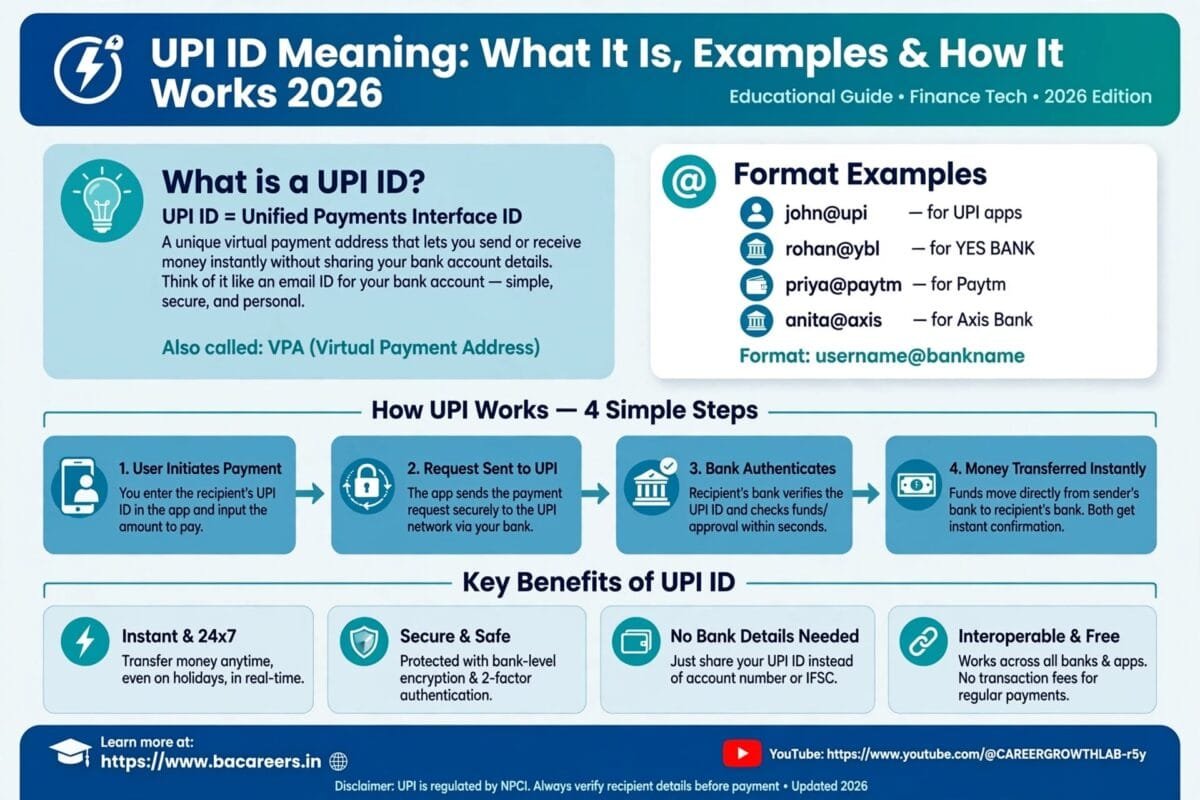
A UPI ID (Unified Payments Interface ID)—also known as a Virtual Payment Address (VPA)—is a unique digital identifier that acts as a financial email address to instantly send and receive money across bank accounts without revealing sensitive bank account numbers or IFSC codes.
Developed by the National Payments Corporation of India (NPCI), a UPI ID maps a user’s mobile number or handle directly to their underlying bank account via encrypted payment gateways.

[ USER IDENTIFIER ] + “@” + [ BANK / PSP HANDLE ] │
▼
Example: 9XXXXX210@ybl or john.doe@okicici
Structure & Examples of UPI IDs
A standard UPI ID consists of two distinct parts separated by the @ symbol:
Username / Prefix: A unique alphanumeric handle chosen by the user or auto-assigned by the app (e.g., mobile number, name, or custom ID).
Payment Service Provider (PSP) Handle: The domain extension assigned by the partner bank processing the transaction.
Popular App Handle Examples
| Mobile App / PSP | Partner Bank | Sample UPI ID Format |
| Google Pay (GPay) | ICICI, HDFC, SBI, Axis Bank | username@okicici, username@oksbi |
| PhonePe | Yes Bank, ICICI Bank | mobileNumber@ybl, mobileNumber@ibl |
| Paytm | Paytm Payments Bank | mobileNumber@paytm |
| BHIM UPI | NPCI Direct | mobileNumber@upi |
| Amazon Pay | Axis Bank | mobileNumber@apl |
Key Characteristics of UPI IDs
Are UPI IDs Case-Sensitive? No, UPI IDs are NOT case-sensitive. Entering
John.Doe@Okiciciorjohn.doe@okiciciroutes to the exact same account.Is a UPI ID Unique? Yes. No two individuals across any app can hold the identical payment handle.
Can One Bank Account Have Multiple UPI IDs? Yes. A user can link the same savings account to multiple apps (e.g., GPay, PhonePe, and Paytm) with different UPI handles.
Personal UPI ID vs. Merchant UPI ID vs. Corporate UPI ID
| Feature | Personal UPI ID | Merchant UPI ID | Corporate / Enterprise UPI ID |
| Primary User | Individual retail customers. | Small shop owners, retail vendors. | Large enterprises, e-commerce platforms. |
| Format Example | 9xxxxxxx10@ybl | merchantstore@paytm | companyname@icici |
| Transaction Limits | Standard limit (₹1 Lakh/day). | Custom merchant limits. | Expanded limit (up to ₹5 Lakhs for healthcare/education). |
| Features | Peer-to-Peer (P2P) transfers. | Dynamic QR codes, Soundbox alerts. | Bulk payouts, automated reconciliation, Webhooks. |
Decoding Bank Statements: What Does “UPI-DR” Mean?
When reviewing online bank statements, you will often see terms like UPI-DR or UPI-CR:
UPI-DR (UPI Debit): Indicates money was debited (deducted) from your bank account via a UPI transaction. (Example statement:
UPI-DR-4012938475-merchant@ybl).UPI-CR (UPI Credit): Indicates money was credited (received) into your bank account via a UPI transfer.
🏦 FinTech BA Perspective: How UPI Payment Architecture Works
For Business Analysts working in FinTech, banking, or e-commerce integration projects, understanding the API messaging flow behind a UPI transaction is essential.
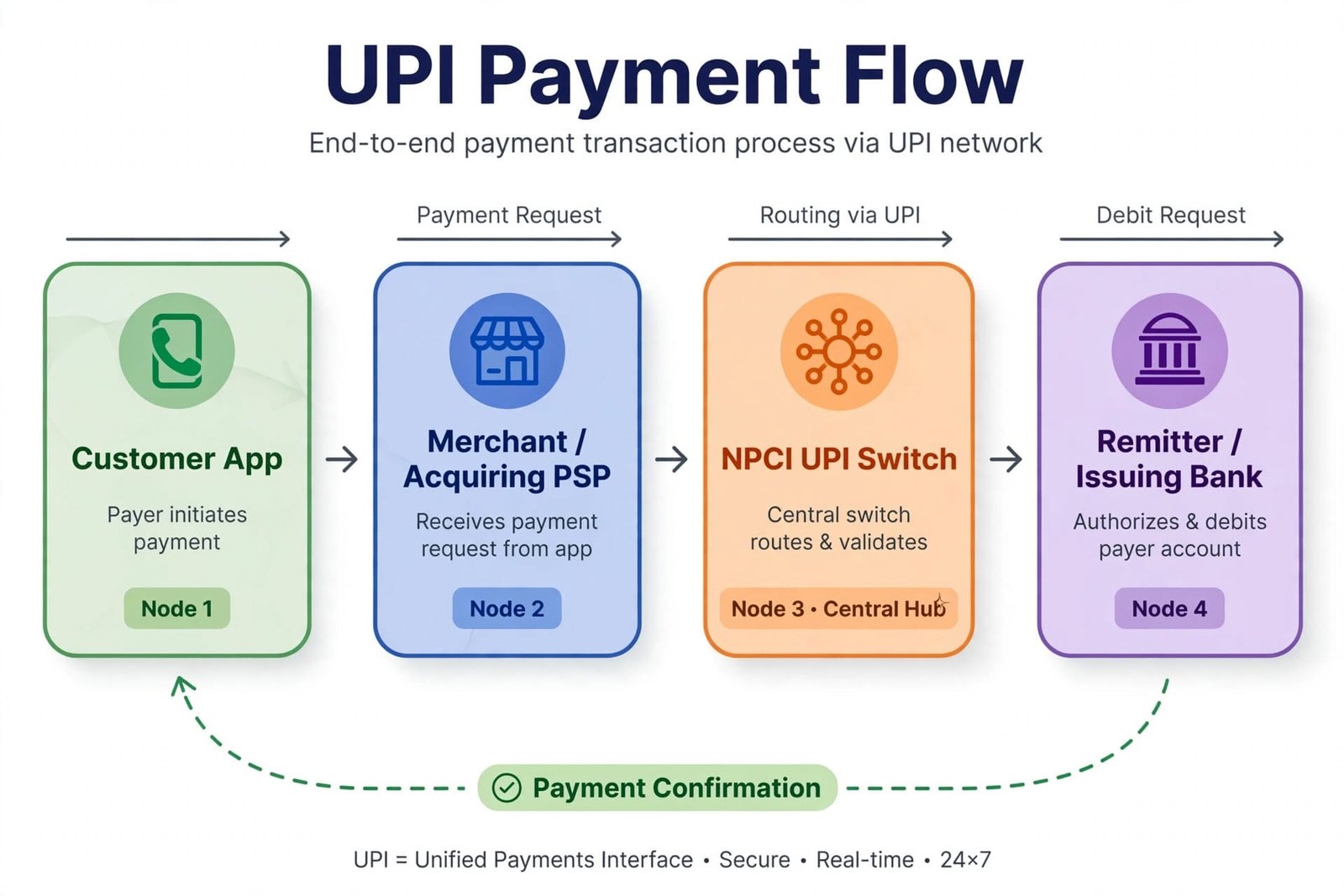
Elicitation & API Contracts: BAs define ISO 20022 message specs (
pasp,pay,confirm) connecting mobile apps to NPCI switches.Verification Logic: The payment gateway checks NPCI VPA lookup tables to validate the recipient’s UPI ID before triggering the transaction debit.
Error & Timeout Handling: BAs map fallback responses for network timeouts (e.g., auto-reversing
UPI-DRentries within 24 hours).
Business Analysis Resource Hub (Internal Links)
📘 Documentation Guide: BRD vs FRD Differences & Real-World Examples — Learn how FinTech requirements map into formal functional specifications.
🛠️ System Architecture: ATM Sequence Diagram Explained — Explore interaction diagrams for financial transactions.
🔄 SDLC Methodology: Waterfall Model in Software Engineering: 6 Phases & BA Role — Understand financial compliance and change control.
How to create a UPI ID
Creating a UPI ID is a simple and straightforward process. Here’s a step-by-step guide to help you get started:
Download a UPI-enabled app:
To create a UPI ID, you’ll need to download a UPI-enabled app from the Google Play Store or Apple App Store. Some popular UPI-enabled apps include Google Pay, PhonePe, Paytm, and BHIM.
Register and link your bank account:
Once you’ve downloaded the app, you’ll need to register by providing basic details such as your mobile number and email address. After registration, you’ll be prompted to link your bank account to the app. This is done by selecting your bank from the list of available options and verifying your account through a one-time password (OTP).
Set up a UPI PIN:
After linking your bank account, you’ll need to set up a UPI PIN. This PIN acts as a secure authentication method for all your UPI transactions. Make sure to choose a PIN that is unique and not easily guessable.
Create your UPI ID:
Once your bank account is linked and the UPI PIN is set up, you can proceed to create your UPI ID. Depending on the app, you can choose to create a UPI ID using your mobile number, email address, or a custom alias. Follow the app’s instructions to complete the process.
Verify your UPI ID:
After creating your UPI ID, the app will usually send a verification link or code to the email address or mobile number associated with your UPI ID. Verify your UPI ID using the provided verification method to ensure its authenticity.
Once your UPI ID is created and verified, you’re ready to start making transactions using UPI. Remember to keep your UPI ID and UPI PIN secure and avoid sharing them with anyone to prevent unauthorized access to your account.
Using UPI ID for transactions
UPI ID can be used for a wide range of transactions, making it a versatile payment method. Here are some common use cases:
Person-to-person transfers:
UPI ID allows you to send money directly to another person’s UPI ID. Whether you’re paying back a friend, splitting bills, or sending money to family members, you can do it instantly and securely through UPI ID.
Merchant payments:
Many businesses, both online and offline, accept UPI payments. By scanning a QR code or entering the merchant’s UPI ID, you can pay for products and services conveniently and securely.
Bill payments:
UPI ID can be used to pay utility bills, mobile recharges, DTH subscriptions, and more. Simply enter the biller’s UPI ID or scan the QR code provided on the bill, and the payment will be processed instantly.
Online shopping:
UPI ID is increasingly being accepted as a payment method on e-commerce platforms. By selecting UPI as the payment option during checkout, you can enter your UPI ID to complete the purchase seamlessly.
Government services:
UPI ID can also be used to pay for government services such as taxes, fees, and fines. Many government departments and agencies have integrated UPI as a payment method to facilitate easy and secure transactions.
When making transactions using UPI ID, it’s important to verify the recipient’s details to ensure that the payment is being made to the correct party. Double-check the UPI ID, name, and other relevant information before initiating the transaction to avoid any errors or fraudulent activity.
Security measures and precautions
While UPI ID offers convenience and efficiency, it’s crucial to prioritize the security of your transactions. Here are some security measures and precautions you should keep in mind when using UPI ID:
Use strong UPI PIN:
Set a strong UPI PIN that is unique and not easily guessable. Avoid using common patterns or sequences of numbers, such as 1234 or 0000. Regularly update your UPI PIN to ensure maximum security.
Enable two-factor authentication:
Many UPI-enabled apps offer the option to enable two-factor authentication (2FA) for additional security. This can include features like fingerprint or face recognition, pattern lock, or a secondary PIN. Enable these features to add an extra layer of protection to your UPI transactions.
Secure your device:
Keep your smartphone and UPI-enabled app updated with the latest security patches and software updates. Install a reliable security app to protect against malware and viruses. Avoid downloading apps from unofficial sources or clicking on suspicious links.
Beware of phishing attempts:
Be cautious of phishing attempts where fraudsters try to trick you into revealing your UPI ID, UPI PIN, or other sensitive information. Avoid clicking on links or providing personal details in response to unsolicited emails, messages, or calls.
Regularly monitor your transactions:
Keep a close eye on your transaction history and bank statements. Report any unauthorized transactions or suspicious activities to your bank or the UPI-enabled app immediately.
By following these security measures and staying vigilant, you can ensure the safety of your UPI transactions and protect your financial information from unauthorized access.
Common misconceptions
Despite its increasing popularity, there are still some common misconceptions about UPI ID that need to be addressed. Let’s debunk a few of them:
UPI ID is only for tech-savvy individuals:
While UPI ID is certainly embraced by tech enthusiasts, it is designed to be user-friendly and accessible to all. The user interface of UPI-enabled apps is intuitive, making it easy for even non-tech-savvy individuals to navigate and use the system.
UPI ID is not secure:
UPI ID transactions are built on a secure platform that uses robust encryption and authentication protocols. As long as users follow the recommended security measures and precautions, UPI ID offers a high level of security.
UPI ID can only be used for small transactions:
UPI ID has no transaction limit, allowing users to make both small and large transactions. The transaction limit is set by the user’s bank, and it can be increased based on their specific requirements.
UPI ID is only for personal use:
UPI ID is not limited to personal use; it can also be used by businesses for various payment purposes. Many businesses, both small and large, have integrated UPI ID as a payment option to provide their customers with a convenient and seamless payment experience.
By dispelling these misconceptions, more individuals and businesses can realize the full potential of UPI ID and leverage its benefits for their financial transactions. Hope this helped you to provide overview on upi id meaning.
Frequently asked questions about UPI ID
Is UPI ID available only in India?
– Yes, UPI ID is currently available only in India. It is a system developed by the National Payments Corporation of India (NPCI) to facilitate seamless and instant fund transfers within the country.
Can I have multiple UPI IDs linked to the same bank account?
– No, you can have only one UPI ID linked to a bank account. However, you can link multiple bank accounts to a single UPI ID.
Can I change my UPI ID?
– Yes, you can change your UPI ID by following the instructions provided by the UPI-enabled app you are using. However, it’s important to note that changing your UPI ID may require re-verification and updating the details with your contacts and service providers.
Can I use UPI ID without a smartphone?
– UPI ID is primarily designed for smartphone use, as it relies on UPI-enabled apps. However, some banks offer USSD-based UPI services that can be accessed using basic feature phones.
Are there any transaction fees or charges for using UPI ID?
– Most UPI-enabled apps do not charge any transaction fees for using UPI ID. However, it’s advisable to check with your bank or the specific app for any applicable charges or limits.
br/>
Conclusion and final thoughts
The advent of UPI ID has transformed the way we transact, providing a seamless, secure, and efficient payment method. Whether you’re a tech-savvy individual or a business owner, UPI ID offers unparalleled convenience and flexibility for all your financial transactions. By understanding the meaning of UPI ID, its various applications, and the security measures you need to keep in mind, you can take full advantage of this game-changing technology. Embrace the world of UPI ID, where convenience, efficiency, and security converge, and say goodbye to the hassles of carrying cash or remembering bank account details. Make the switch to UPI ID today and experience a new era of digital payments.
We hope this article helped you to provide overview on upi ID Meaning and security measures.
Relevant Articles :
- UPI Meaning: A Comprehensive Guide to Understanding the Meaning and Impact of UPI in the Financial Landscape
- How UPI Payments are Streamlining Financial Interactions : Making Every Transaction Count
- Unified Payments Interface :The Future of Payments
- How payments will happen?
Frequently Asked Questions (FAQ)
UPI ID (Unified Payments Interface ID) is a unique virtual payment address (e.g., name@bank) that allows users to transfer funds directly between bank accounts without sharing sensitive banking credentials.
No, UPI IDs are not case-sensitive. Entering upper case or lower case letters in a UPI handle will direct the money to the same account.
A UPI ID is your public address used to identify your account for receiving or sending funds. A UPI PIN is a secret 4 or 6-digit passcode entered to authorize payments.
🎁 Become a Better Business Analyst
Join 1,200+ Business Analysts learning every week.
Get instant access to:
📘 FREE Business Analyst Templates
🎯 Interview Preparation Guides
🚀 Agile & Scrum Tutorials
🤖 AI for Business Analysts
📈 Career Growth Tips
100% Free • No Spam • Unsubscribe Anytime

Thank You