

FREE DOWNLOAD: Business Analyst Documentation Toolkit
Get instant access to real-world BRD, FRD, and project story templates used by senior BAs.
Download Free Templates PDF
Introduction :
Because software development today operates in such a fast-paced environment in which everything is constantly changing, it’s unlikely that traditional methods of project management will always work as effectively. This is where Agile product development methodology can help by enabling teams to quickly accommodate changing requirements and over time, deliver greater value. And at the heart of the Agile universe, for product delivery value, you have a methodology by the name of Scrum, which serves as the guide for the delivery team.
The scrum framework has a leader that it identifies as a Scrum Master and as is commonly seen when an organization embarks on an Agile transformation, many individuals have various misconceptions about this leadership role. Some are as outright as referring to the Scrum Master as a “glorified project manager”, while others are more lenient as they describe it as a “team secretary”, which takes minutes from the tickets to be added into the Jira backlog and ensures meeting agendas are kept.
Neither of these are close to the truth!
The role of the Scrum Master is one of the most impactful and important roles in a Scrum team and the objective of a Scrum Master is to empower a team for self-organization, expedite the product delivery, and also act as the keeper of the Agile practices.
Before we look into all the roles that a Scrum Master may have in a given day, let’s quickly take a look at some of the fundamental pillars of the Scrum framework that he or she is the guardian of.
* Sprints – Time-boxed work intervals for product delivery and product development.
* Product Backlog – A prioritized list of everything that can be done in the product; it is the single source of requirements for any changes to be made to the product.
* Sprint Planning – The activity where the team and Product Owner collaborate to define what work will be done in the sprint and create the Sprint Backlog.
* Daily Stand-up (Scrum) – A quick daily meeting where the delivery team members sync up and discuss the plan for the day and impediments.
* Sprint Review – A meeting held at the end of a sprint to demonstrate the work that has been completed and gather feedback.
* Sprint Retrospective – A meeting where the team reflects on the past sprint and identifies actions to improve processes in the next sprints.
The Concept of Servant Leadership
The fundamental approach of any good Scrum Master comes down to servanthood. In the words of Robert K. Greenleaf, a servant leader is “someone who, while acting for a higher purpose, is the leader” of “a group of two or more persons, with whom the leader is united in a search for meaning, justice and progress.
He or she has more the character of an elder or teacher than that of a master, adviser, counselor, organizer, engineer or commander”.
This differs from the more traditional role of project manager who makes decisions regarding who gets what to work on, and whether this has to get delivered and by when. Instead, a Scrum Master places value in empowering the team to be the ones who make these decisions:
* He or She coaches instead of commanding: “instead of telling you “You have to work until tomorrow to finish this ticket”, the SM may say “What challenges are you facing in this ticket? And how can I support you in removing these” “
* He or She promotes self-organization: Empowering the development team to make technical decisions allows for better team engagement and a stronger product architecture.
* He or She creates a safe and trusting environment: Fosters an open, collaborative, and trusting work environment where everyone feels psychologically safe to be part of the team.
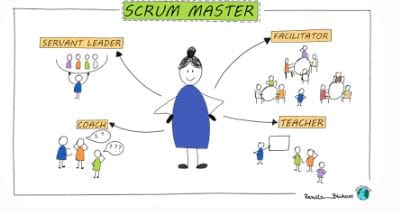
The 5 Pillars of the Scrum Master Role
A competent Scrum Master needs to play a multitude of roles throughout the day as part of product development:
1. Facilitator: A Scrum Master organizes, manages and leads the Scrum ceremonies and ensures each ceremony is held at the same time and location, remains time-boxed and remains productive. He or she facilitates the discussion, clarifies questions about the events and guides the team to remain focused on the objective of the event.
2. Coach: This is perhaps the single most important pillar in the Scrum Master role. The Scrum Master coaches the delivery team in Agile Principles, how they can become cross-functional, and also coaches the rest of the organization on the adoption of Agile.
3. Protector (The Shield): The Scrum Master protects the development team from outside interruptions and unnecessary intrusions that might derail the flow of their sprint. Stakeholders and mid-level management, are a big part of this pillar; Scrum Masters shield their team members so they are not asked for to add additional work to the sprints that they have already committed.
4. Impediment Remover: An “impediment” is defined as anything which gets in the way of developers delivering sprint value. This may include anything from a lack of access to APIs, an email from mid-level management, to contradicting business requirements; anything that stops a team member from finishing his/her task and is resolved by the Scrum Master.
5. Change Agent: While not as focused solely on the Scrum team, a Scrum Master has the ability to facilitate changes across the entire organization that contribute to a successful Agile transformation. This can involve changing processes and/or culture in order to better align with the Agile methodologies.
Crucial Qualities of a Great Scrum Master
* Empathy: Understanding how each of the members of the team think, their product owner and all stakeholders involved will build trust.
* Clear communication: Having the ability to freely discuss their concerns with the other members, conduct the meetings efficiently and resolving any conflicts are all part of the success of a Scrum Master.
* Problem-solving ability: The ability to quickly resolve the bottleneck issue, whether it’s a technical issue or organizational one.
* Adaptability and Continuous Learning: This is important because the way you coach a team might change as the team and the conditions surrounding the team change over time.
In summary, the Scrum Master is an essential piece of a successful software development organization. Rather than simply a task tracker, the Scrum Master plays the role of the driver of transformation from an organization of individual contributors to a highly effective, self-organizing team that adapts quickly to change.
Core Responsibilities of the Scrum Master
A Scrum Master’s daily activities span three distinct areas of impact:
| Service to the Product Owner | Service to the Development Team | Service to the Organization |
| Helps find techniques for effective Product Backlog management. | Coaches the team in self-management and cross-functional productivity. | Leads, trains, and coaches the wider organization in its Scrum adoption. |
| Ensures the team understands the product goal and backlog items clearly. | Helps the team focus on creating high-value Increments that meet the “Definition of Done.” | Plans and advises on Scrum implementations within the enterprise. |
| Facilitates collaborative Scrum events and meetings as requested or needed. | Actively removes organizational and technical impediments (blockers). | Removes barriers between stakeholders, business analysts, and Scrum teams. |
Scrum Master vs. Traditional Project Manager
To ensure absolute clarity, here is how the Scrum Master role differs from a legacy Project Manager:
| Attribute | Traditional Project Manager | Agile Scrum Master |
| Authority | Direct authority over the team and task assignments. | No direct authority over people; guides through coaching and facilitation. |
| Focus | Project scope, budget, milestones, and status reporting. | Team health, process improvement, and removing delivery blockers. |
| Task Allocation | Assigns specific tasks to individual team members. | Empowers the team to pull and assign their own tasks from the backlog. |
| Metric for Success | On-time, on-budget delivery of the pre-planned scope. | Delivery of maximum business value and continuous improvement of team velocity. |
Frequently Asked Questions (FAQs)
Is a Scrum Master a managerial position?
A: It is considered a leadership role and not a managerial role. Scrum Masters do not have the responsibility of managing any staff’s performance or hiring and firing staff.
Can a Developer or BA act as the Scrum Master?
A: Yes technically it is possible but not always a great idea. It can sometimes cause conflict of interest and could limit the capacity of the Scrum Master to address the process’s health and the development team’s needs.
What is an impediment in Scrum?
A: Any blockage that is preventing the developer from completing their task is an impediment in Scrum. Examples include lack of API documentation, delays in getting UI/UX assets, contradictory business requests, etc.
🎁 Become a Better Business Analyst
Join 1,200+ Business Analysts learning every week.
Get instant access to:
📘 FREE Business Analyst Templates
🎯 Interview Preparation Guides
🚀 Agile & Scrum Tutorials
🤖 AI for Business Analysts
📈 Career Growth Tips
100% Free • No Spam • Unsubscribe Anytime
