

FREE DOWNLOAD: Business Analyst Documentation Toolkit
Get instant access to real-world BRD, FRD, and project story templates used by senior BAs.
Download Free Templates PDFJAD, which stands for Joint Application Development, is a structured requirements-gathering technique that brings together business stakeholders, end users, software developers, and business analysts in collaborative workshops to define system requirements and design software solutions rapidly.
What is a JAD Session in Business Analysis?
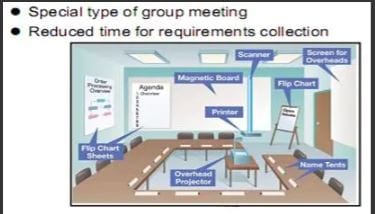
Rather than individual stakeholder interviews, JAD (Joint Application Development) sessions instead opt for a set of facilitated group workshops. Instead of going back-and-forth via countless emails, or waiting days ( or weeks) for individual review cycle to be completed, we get all our key decision makers into one room, or virtual workshop to hammer out software features together.
A technique IBM pioneered in the late 1970s, JAD remains a core elicitation process for many of us Business Analysts (BA) in order to rapidly design products, build shared consensus, eliminate ambiguities, and massively shave the time taken to build out functionality.
Key Takeaway: JAD uses led, interactive sessions that bring business execs, system analysts and technical architects together to gather requirements. The Four Stages of Executing a Successful JAD Session In order to maximize their output, Business Analysts will typically run JAD sessions in four distinct phases:
Key Participants in a JAD Session
A successful JAD workshop relies on well-defined roles to ensure high engagement and productive outcomes:
| JAD Role | Primary Responsibilities | Who Fills This Role? |
| Executive Sponsor | Sets strategic vision, approves project budget, and resolves high-level scope decisions | Business VP, Product Director, Sponsor |
| Facilitator (Lead BA) | Leads discussion, keeps agenda on track, manages conflict, and ensures equal participation | Senior Business Analyst, Scrum Master |
| Scribe / Recorder | Documents requirements, action items, decisions, wireframe notes, and open questions | Junior BA, Technical Writer |
| End Users / Subject Matter Experts (SMEs) | Provide domain expertise, validate operational workflows, and state operational needs | Department Leads, Operations Staff |
| Technical Lead / Architect | Evaluates technical feasibility, infrastructure constraints, and system integration logic | Lead Developer, Solution Architect |
Sample 1-Day JAD Session Agenda Template
Structuring the workshop agenda ensures all functional topics are covered systematically without losing focus:
| Time / Slot | Agenda Topic | Primary Goal / Deliverable |
| 09:00 AM – 09:30 AM | Context & Scope Alignment | Review business drivers, project vision, and workshop objectives. |
| 09:30 AM – 11:00 AM | As-Is vs. To-Be Workflow Mapping | Brainstorm user interactions, process steps, and pain points. |
| 11:00 AM – 12:30 PM | Functional Requirements Breakdown | Detail data inputs, business logic, rules, and system outputs. |
| 01:30 PM – 03:00 PM | Screen Mockups & UI Prototyping | Review interactive wireframes, field layouts, and navigation paths. |
| 03:00 PM – 04:30 PM | Technical Feasibility & Exception Rules | Assess system limits, security, error handling, and API constraints. |
| 04:30 PM – 05:00 PM | Action Item Review & Sign-off | Document open questions, assign owners, and outline next steps. |
The 4 Stages of Executing a Successful JAD Session
To maximize efficiency, Business Analysts execute JAD across four structured phases:
JAD Planning & Preparation
- Figure out exactly what requirements are needed.
- Select the core decision-makers; SME’s, Tech Lead and business sponsor(s).
- Start creating early domain documentation: diagrams and wireframes may form the base.
JAD Conduct / Workshop Execution
- Kick the JAD off with ground rules in place.
- Facilitate interactive discussion using tools like: Miro, Lucidchart or Visio.
- Capture decisions on paper or digitally immediately – mediated and settled issues between disparate views between stakeholders and project participants.
JAD Consolidation & Document Drafting
- Turn the initial paper documentation into your formal (Business requirements documents (BRDs or Functional Requirements Specifications (FRDs)).
- Refine user stories and acceptance criteria generated by the JAD sessions using tools such as JIRA or CONFLUENCE.
Final Review & Signoff
- Pass final drafted documents to the project team for review and approval.
- Incorporate changes/updates and facilitate a final, rapid review session.
Benefits of Using JAD in Modern Software Development
Fast track Project Delivery: Weeks worth of exchange now condensed into days or hours.
High Quality Requirements: End users and developers can immediately clarify ambiguities when a BARD is discussing.
Scope creep limitations: Developers and business execs will quickly identify unrealistic requests, therefore the project goes in the specified direction.
Increased Stakeholder buy-in: Everyone has buy in that hey were there and participated – therefore less resistance when delivering.
Frequently Asked Questions (FAQ)
What does JAD stand for in business analysis?
JAD stands for Joint Application Development and is a structured requirement gathering workshop style method that promotes quick consensus and stakeholder input across a software project team.
How does a JAD differ from a typical meeting?
A typical business meeting involves status updates, project team progress updates, problem-solving updates and so forth, whereas JADs bring together several project participants into a high intensity, guided, and facilitated sessions for defining software requirements and design elements. A JAD typically requires, an explicit JAD Sponsor (business), a Facilitator (Business Analyst typically), an expert facilitator (Scribe), and expert and tactical thinkers as subject matter experts from the relevant fields, the objective is not updates, but requirements definition and design.
Is JAD used in Agile projects?
Yes, and many well seasoned professionals actively employ it. It’s often used in Agile environments (Scrum, XP, Kanban) where more mini JAD sessions, sometimes called “workshops or refinement sessions” are held more frequently for specific, smaller pieces of functionality to clarify user stories and refine epic stories in preparation for spring planning.
Related Articles :
JAD in Business Analysis: Complete Guide to Joint Application Development Sessions
How to Facilitate a JAD Session: A Step-by-Step BA Guide
Joint Application Development (JAD)

J
Using for an iterative approach
🎁 Become a Better Business Analyst
Join 1,200+ Business Analysts learning every week.
Get instant access to:
📘 FREE Business Analyst Templates
🎯 Interview Preparation Guides
🚀 Agile & Scrum Tutorials
🤖 AI for Business Analysts
📈 Career Growth Tips
100% Free • No Spam • Unsubscribe Anytime
