In the dynamic landscape of software engineering, the success of any project hinges on effective requirements elicitation and analysis. Gathering the right information from stakeholders is not just a box-ticking exercise; it’s an art that can significantly influence the trajectory of your project. Poorly defined requirements can lead to costly miscommunications, wasted resources, and ultimately, project failure. Conversely, mastering the methods of eliciting and analyzing requirements empowers teams to deliver solutions that align perfectly with business needs and user expectations. In this article, we’ll uncover key strategies that will elevate your approach, providing proven techniques to refine your requirements-gathering skills. Whether you’re a seasoned professional or new to the field, these insights will equip you with the tools needed to navigate challenges and ensure your software engineering process is streamlined and effective. Join us as we delve into the essentials of mastering this critical phase of software development, paving the way for successful outcomes and happier clients.
In software engineering, success often depends on how well requirements are gathered, analyzed, and managed. If the requirements are unclear or incomplete, even the most talented development team may end up delivering the wrong solution. That’s where requirements elicitation and analysis come into play.
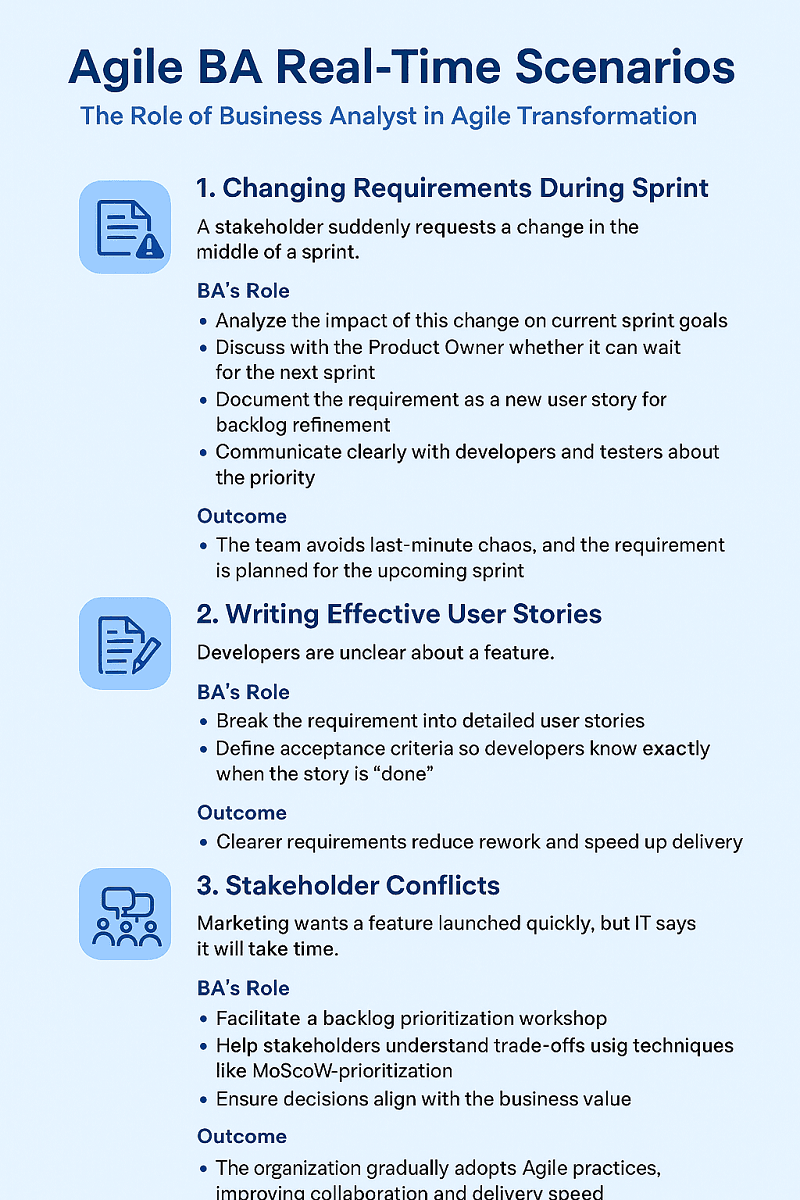
In this article, we’ll explore the importance of these processes, practical techniques, real-world examples, and the role of a Business Analyst (BA) in Agile Transformation.
Understanding Requirements Elicitation in Software Engineering
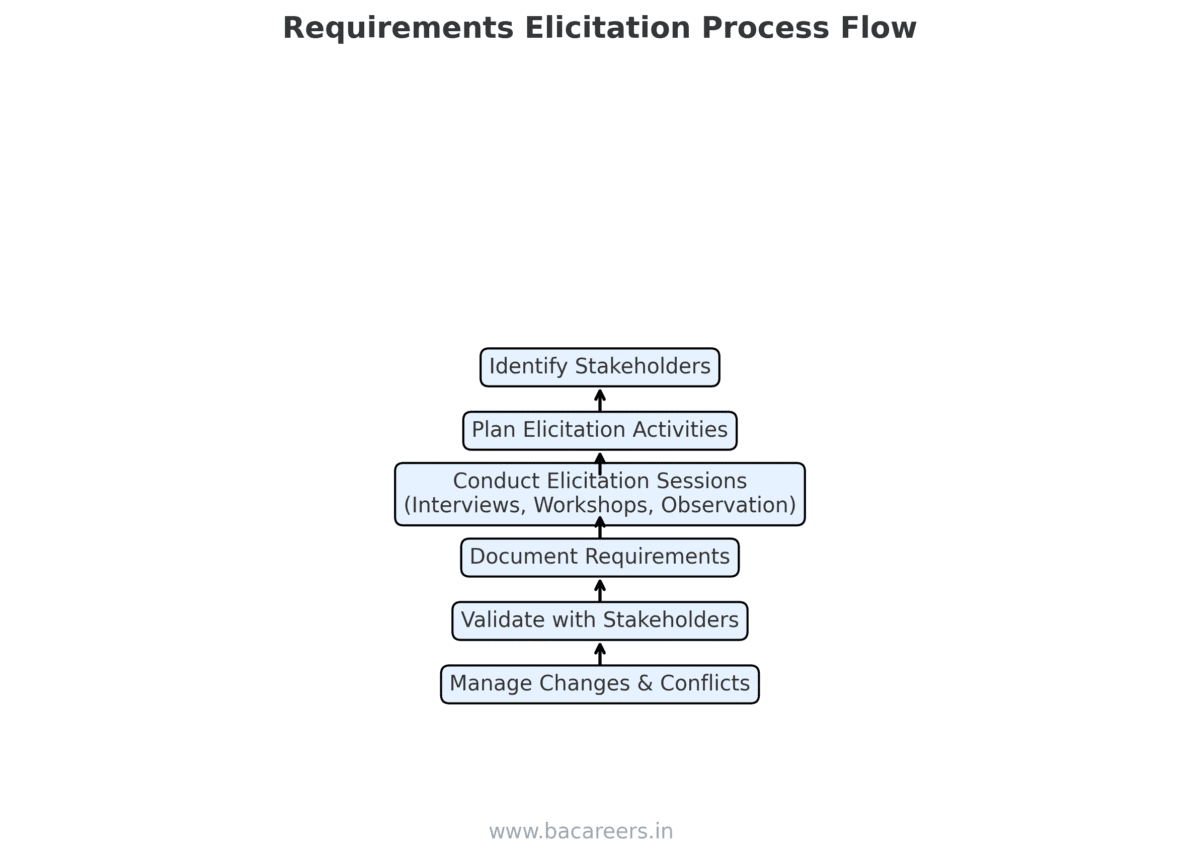
Requirements elicitation is the process of gathering information from stakeholders to understand what they expect from a system or product. It’s not just about asking questions—it’s about identifying both spoken and unspoken needs.
👉 Example: Imagine you’re building a loan management system for a bank. The stakeholders may request features like customer onboarding, loan disbursement, and EMI calculation. But through elicitation techniques like interviews and workshops, you may also uncover hidden needs such as integration with the bank’s existing KYC system.
📌 Related Article: Effective Requirement Elicitation Techniques
The Importance of Requirements Analysis
After requirements are gathered, they must be analyzed to ensure they are clear, consistent, and feasible. Requirements analysis answers critical questions such as:
Are the requirements technically achievable?
Do they align with business goals?
Are there conflicting expectations among stakeholders?
👉 Real-time scenario: In an e-commerce project, one team may want a “one-click checkout” feature, while another demands “multi-step payment verification for security.” Analysis helps identify such conflicts and balance usability with security.
📖 External Resource: IEEE Guide on Software Requirements
https://www.youtube.com/watch?v=VKkNOSoaISQ&t=187s
Key Challenges in Requirements Elicitation
Some common challenges include:
Unclear Stakeholder Expectations: Stakeholders may not know what they want until they see a prototype.
Changing Requirements: Business needs evolve, especially in Agile environments.
Communication Gaps: Technical teams may misunderstand business language.
👉 Scenario: In a healthcare project, doctors may request “faster report generation,” but unless clarified, the development team may not know whether that means reducing data entry time or speeding up system performance.
Effective Techniques for Requirements Elicitation
Popular elicitation techniques include:
Interviews: Direct discussions with stakeholders.
Workshops: Collaborative brainstorming sessions.
Observation/Shadowing: Watching end-users perform tasks.
Surveys/Questionnaires: Collecting input from large groups.
Use Cases & User Stories: Capturing user interactions with the system.
👉 Example in Agile: User stories such as “As a customer, I want to receive real-time order tracking updates so that I know when my delivery will arrive.”
Stakeholder Identification and Engagement
The success of elicitation depends on engaging the right stakeholders. These may include:
Business users (who use the system daily)
Product owners and managers
Technical teams (developers, testers, architects)
Regulatory authorities (in banking, healthcare, etc.)
👉 Scenario: In a UPI payments app, engaging with the Reserve Bank of India (RBI) representatives ensures compliance, while involving customers provides usability insights.
📌 Related Reading: Stakeholder Engagement Strategies
Tools and Technologies for Requirements Analysis
Modern tools help BAs and development teams manage requirements effectively:
JIRA – for Agile backlog management
Confluence – for documentation
Balsamiq / Figma – for UI wireframes
MS Visio / Lucidchart – for process modeling
👉 Real-time scenario: A Business Analyst in an Agile team uses JIRA to create epics and user stories, linking them with acceptance criteria to ensure traceability.
Best Practices for Documenting Requirements
Good documentation bridges the gap between business and technical teams. Best practices include:
Writing clear and testable requirements
Using diagrams and flowcharts to visualize processes
Maintaining a requirements traceability matrix (RTM)
Updating documents continuously in Agile environments
👉 Example: In a microfinance software project, a traceability matrix helped ensure every regulatory compliance requirement was mapped to a functional feature.
The Role of Prototyping in Requirements Elicitation
Prototyping helps stakeholders see and interact with a model of the system before development.
👉 Scenario: In a travel booking platform, a clickable prototype designed in Figma helped stakeholders decide whether the search and filter options were intuitive, saving rework costs later.
Common Pitfalls in Requirements Analysis and How to Avoid Them
Overlooking Stakeholders: Ignoring end-users often leads to poor adoption.
Ambiguous Language: Words like “fast” or “user-friendly” need measurable criteria.
Not Validating Requirements: Always confirm with stakeholders before finalizing.
👉 Example: A telecom billing project failed because “real-time billing” was not defined. The business expected updates within seconds, while developers assumed updates within an hour were fine.
Business Analyst Role in Agile Transformation
In Agile Transformation, Business Analysts play a crucial bridging role:
Facilitator: Ensuring clear communication between product owners, developers, and testers.
Elicitor: Gathering requirements in the form of user stories and acceptance criteria.
Prioritizer: Helping stakeholders decide which features deliver maximum value in each sprint.
Change Agent: Guiding teams to adapt from traditional documentation-heavy processes to lightweight Agile practices.
👉 Real-time Agile scenario: In a retail app migration, the BA worked with the Product Owner to break down a large feature “Customer Loyalty Program” into smaller user stories that could be delivered sprint by sprint.
📌 Learn More: Agile Methodology for Business Analysts
Conclusion: Enhancing Software Development through Effective Requirements Management
Effective requirements elicitation and analysis form the backbone of successful software projects. By applying the right techniques, engaging stakeholders, using modern tools, and avoiding common pitfalls, organizations can reduce project risks and deliver real value.
Business Analysts, especially in Agile environments, play a key role in ensuring continuous alignment between business needs and technical solutions.
In short, mastering requirements elicitation and analysis is not just a step in software engineering—it’s the path to delivering products that truly meet user expectations.
you can also visit below articles ;
❓ FAQs on Requirements Elicitation and Analysis in Software Engineering

Business Analyst , Functional Consultant, Provide Training on Business Analysis and SDLC Methodologies.
🌐 Founder of BACareers.in| Freelance Business Analyst & Content Writer | Banking Domain Expert | Agile Practitioner | Career Mentor
I am the founder and content creator of BACareers.in, a specialized platform for aspiring and experienced Business Analysts. I share real-world insights, career tips, certification guidance, interview prep, tutorials, and case studies to help professionals grow in the BA career path.
We have strong experience in Banking, Financial Services, and IT. We bring deep domain knowledge and hands-on expertise in core banking systems, payment integrations, loan management, regulatory compliance (KYC/AML), and digital banking transformations.
💼 Business Analyst Expertise
Requirement Elicitation, BRD/FRD, SRS, User Stories, RTM
Agile & Waterfall (Scrum, Kanban) methodologies
Business Process Modeling (BPMN, UML, AS-IS/TO-BE)
Stakeholder Communication & Gap Analysis
UAT Planning, Execution & Support
Core Banking Solutions (Finacle, Newgen BPM, Profile CBS, WebCSR)
✍️ Content Writing & Strategy
Founder of BACareers.in – knowledge hub for BAs & IT professionals
SEO-optimized blogs, training content, case studies & tutorials
Content on Business Analysis, Agile, Banking, IT & Digital Transformation
Engaging, beginner-friendly writing for professionals & learners
🌍 What we Offer
Freelance Business Analysis services: BRD, FRD, UAT, process flows, consulting
Freelance Content Writing: SEO blogs, IT/business content, case studies, LinkedIn posts
A unique blend of analytical expertise + content strategy to turn business needs into solutions and ideas into words that work
📌 Whether you’re an organization seeking BA expertise or a platform needing impactful content, let’s connect and collaborate.
Business Analyst, Agile, BRD, FRD, Banking, Content Writer, SEO writing.