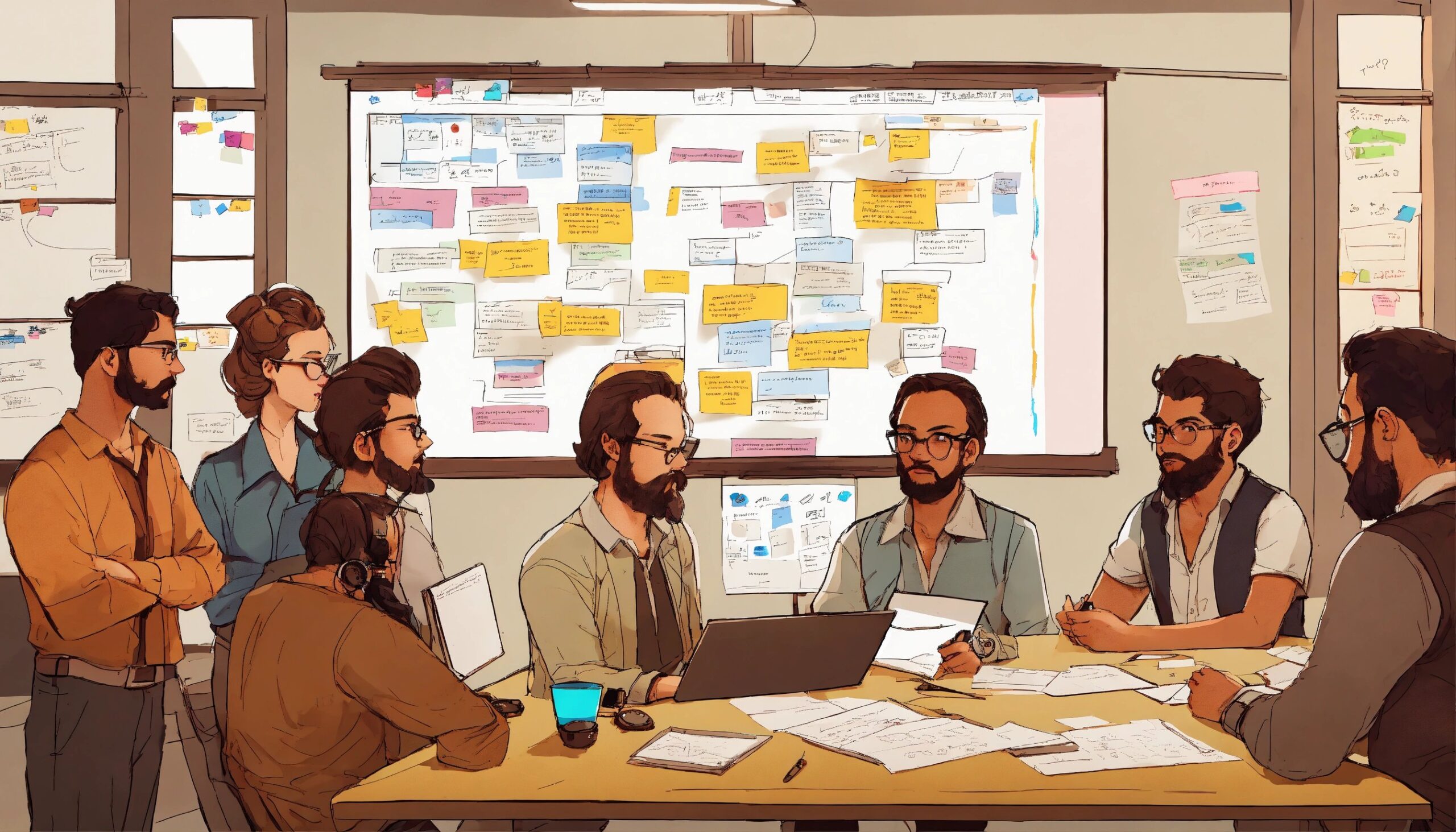
In the fast-paced landscape of software development, where change is constant and adaptability is key, the traditional methods of project management often struggle to keep up. Enter Agile Engineering – a transformative approach that has revolutionized the way software is built, delivering greater efficiency, flexibility, and customer satisfaction.

Agile Engineering is not just a methodology; it’s a mindset, a culture, and a set of principles designed to empower development teams to respond to change quickly and effectively. At its core, Agile Engineering emphasizes collaboration, iterative development, continuous improvement, and customer feedback. By breaking down large projects into smaller, manageable chunks known as “sprints,” teams can deliver working software incrementally, allowing for faster time-to-market and reduced risk.
One of the fundamental principles of Agile Engineering is the prioritization of individuals and interactions over processes and tools. Unlike traditional waterfall methods, where strict documentation and rigid processes reign supreme, Agile encourages face-to-face communication, teamwork, and shared ownership of the project. This fosters a culture of trust and transparency within the team, leading to higher morale and better outcomes.
Another key aspect of Agile Engineering is its focus on delivering value to the customer early and often. By incorporating feedback from stakeholders at every stage of development, teams can ensure that the final product meets the needs and expectations of the end-users. This iterative approach not only minimizes the risk of building the wrong product but also allows for course correction and optimization based on real-world usage data.
Continuous integration and continuous delivery (CI/CD) are also integral components of Agile Engineering. By automating the build, test, and deployment processes, teams can accelerate the delivery of features and enhancements while maintaining high quality. This rapid feedback loop enables developers to detect and fix issues early, reducing the time and effort spent on debugging and rework.
Furthermore, Agile Engineering promotes a culture of experimentation and learning. Teams are encouraged to embrace failure as an opportunity for growth and innovation. By adopting a mindset of continuous improvement, developers can leverage retrospectives to reflect on their processes and identify areas for optimization. This culture of learning not only drives individual development but also contributes to the overall resilience and adaptability of the team.
However, despite its many benefits, AgileEngineering is not without its challenges. Adopting Agile requires a cultural shift within the organization, which can be met with resistance from stakeholders accustomed to traditional methods. Moreover, maintaining momentum and focus amidst changing priorities and deadlines can be daunting for some teams. Nevertheless, with the right support, training, and commitment, organizations can overcome these hurdles and reap the rewards of Agile Engineering.
Conclusion
In conclusion, Agile Engineering represents a paradigm shift in software development, empowering teams to deliver value faster, more efficiently, and with higher quality. By embracing collaboration, iteration, and continuous improvement, organizations can stay ahead of the curve in today’s rapidly evolving digital landscape. As technology continues to advance and customer expectations evolve, Agile Engineering provides a robust framework for driving innovation and success in the modern era of software development.
Agile Framework: A Guide to Adaptive Project Management
Agile Methodology in Software Engineering
Agile Software Development Life Cycle: A Comprehensive Guide

Business Analyst , Functional Consultant, Provide Training on Business Analysis and SDLC Methodologies.
🌐 Founder of BACareers.in| Freelance Business Analyst & Content Writer | Banking Domain Expert | Agile Practitioner | Career Mentor
I am the founder and content creator of BACareers.in, a specialized platform for aspiring and experienced Business Analysts. I share real-world insights, career tips, certification guidance, interview prep, tutorials, and case studies to help professionals grow in the BA career path.
We have strong experience in Banking, Financial Services, and IT. We bring deep domain knowledge and hands-on expertise in core banking systems, payment integrations, loan management, regulatory compliance (KYC/AML), and digital banking transformations.
💼 Business Analyst Expertise
Requirement Elicitation, BRD/FRD, SRS, User Stories, RTM
Agile & Waterfall (Scrum, Kanban) methodologies
Business Process Modeling (BPMN, UML, AS-IS/TO-BE)
Stakeholder Communication & Gap Analysis
UAT Planning, Execution & Support
Core Banking Solutions (Finacle, Newgen BPM, Profile CBS, WebCSR)
✍️ Content Writing & Strategy
Founder of BACareers.in – knowledge hub for BAs & IT professionals
SEO-optimized blogs, training content, case studies & tutorials
Content on Business Analysis, Agile, Banking, IT & Digital Transformation
Engaging, beginner-friendly writing for professionals & learners
🌍 What we Offer
Freelance Business Analysis services: BRD, FRD, UAT, process flows, consulting
Freelance Content Writing: SEO blogs, IT/business content, case studies, LinkedIn posts
A unique blend of analytical expertise + content strategy to turn business needs into solutions and ideas into words that work
📌 Whether you’re an organization seeking BA expertise or a platform needing impactful content, let’s connect and collaborate.
Business Analyst, Agile, BRD, FRD, Banking, Content Writer, SEO writing.