Introduction
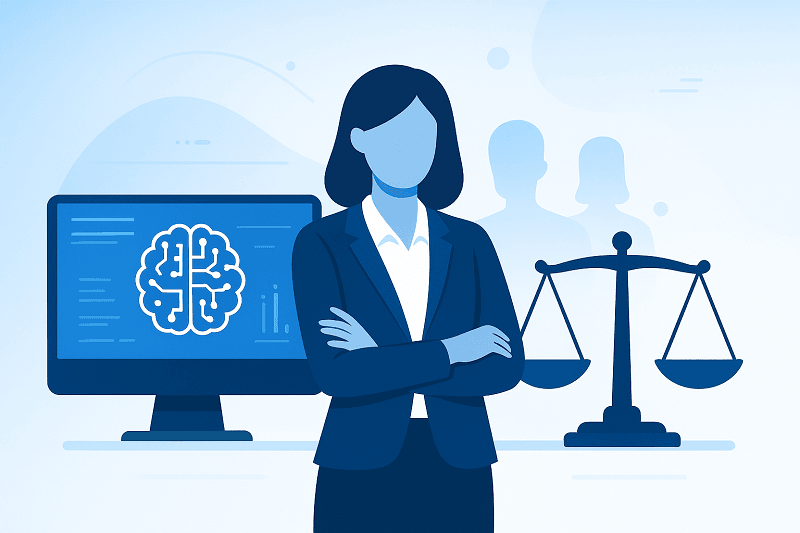
As artificial intelligence becomes a big part of today‘s business solutions, the job of making sure AI is fair, clear, and responsible is becoming more important for Business Analysts (BAs).
Ethical AI is no longer something that’s just nice to have—it’s now a must-have for keeping users trusty, meeting laws, and building long–term business success.
This article shows you how BAs can include ethical AI ideas in their work during the process of gathering needs, talking with stakeholders, creating process models, and checking data.
You’ll also see real–life examples and methods to find any unfairness early on and build AI systems that are fair for everyone.
Table of Contents
What is Ethical AI and Why Should BAs Care?
The BA’s Role in Ethical AI
Spotting Bias During Requirements Gathering
Techniques to Find Ethical Blind Spots
Guaranteeing Fairness in Data Collection and Validation
Real–Life Scenarios for Ethical AI in BA Work
Tools and Frameworks for BAs
Conclusion
1.What is Ethical AI and Why Should BAs Care?
Ethical AI means creating and using AI that is:
Fair
Clear
Inclusive
Responsible
Accountable
Protects privacy
Why BAs Should Care About Ethical AI
Business Analysts connect the business, users, and development teams.
They help shape how AI will work because:
They determine the rules the AI will follow
They help make requirements clear
They understand how users and stakeholders expect the AI to behave
They check if the data is properly used and within proper limits
If unfair or biased ideas aren’t caught during the early stages of setting up requirements, the AI might:
Treat some people unfairly
Make wrong predictions
Hurt certain groups
Put the company at risk of rules or legal trouble
2.The BA’s Role in Ethical AI
A BA has an important part to play in preventing unfair outcomes.
Main Responsibilities of a BA in Ethical AI
Check that the business needs don’t lead to biased results.
Talk to experts, data scientists, compliance teams, and users about ethical risks.
Look at the data to make sure it’s complete, balanced, and fair.
Identify where AI decisions might affect different groups.
Write down fairness, transparency, explainability, and the ability to track the AI in the requirements.
3.Spotting Bias During Requirements Gathering
Bias can appear at different steps.
A BA must be watchful for it during meetings, workshops, and process analysis.
Types of Bias to Watch for
Data Bias—when past data is not representative
Sampling Bias—when some groups are not included enough
Prediction Bias—when AI favors one group
Automation Bias—when people trust AI without checking
Confirmation Bias—when stakeholders use data to support their own ideas
Example
A bank wants to use AI for loan approvals.
If past data shows fewer loans approved for younger people, the AI might repeat that pattern.
What a BA Can Do:
Check if the age data is balanced and ask: “Are we not approving young people because they are riskier, or because the data is biased?”
4.Techniques to Find Ethical Blind Spots
To catch unfairness early, BAs should use specific methods.
Five Whys Technique
Helps you dig into the reasons behind a requirement.
Example:
Requirement: “AI should prioritize customers with long credit history.”
Why?
To reduce risk.
Why?
Because shorter history might mean higher risk.
Why?
Are we unfairly treating younger applicants?
Stakeholder Workshops
Hold a workshop with:
Legal experts
User experience designers
Data scientists
Advocates for customers
Ask questions like:
“Who might be at risk from this AI decision?”
“Can the user understand how the AI makes decisions?”
Data Walkthrough Sessions
Work with data engineers to:
Check where the data comes from
Find any unfair patterns
Remove any attributes that might lead to bias (like race, gender, location)
Scenario–Based Elicitation
This is very useful for AI projects.
Scenario Example:
An AI for facial recognition has trouble with darker skin tones.
Ask: “What happens if the AI can’t identify someone?”
Check if the process treats all users equally.
Suggest alternatives like manual check or better training data.
5.Ensuring Fairness in Data Collection and Validation
Without good, fair, and unbiased data, fairness in AI is impossible.
BA Responsibilities in Data Validation
Check if data represents all users fairly.
Example: Hiring AI trained only with resumes from men will favor men.
Identify any sensitive data and remove it or make it anonymous:
Gender
Race
Caste
Ethnicity
Age (if not relevant)
ZIP codes (sometimes linked to race)
Challenge data assumptions:
If data scientists say: “Fraud happens most in low–income areas,”
The BA should ask: “Is it because of real fraud, or because we monitor those areas more?”
Add requirements in functional needs:
Data must be updated regularly
Bias checks must be done before model approval
AI decisions must be explainable for end users
6.Real–Life Scenarios for Ethical AI in BA Work
Here are real examples of how BAs make sure their AI is fair.
Scenario 1: AI for Heart Attack Risk Prediction
Problem: Most data for training the AI came from men.
Unfair Outcome: Female symptoms aren’t well covered, leading to wrong diagnoses.
What a BA Can Do:
Make sure the data includes enough records from both men and women.
Add a requirement: “Test the AI separately for men and women to ensure fairness.”
Propose getting more data to make it balanced.
Scenario 2: AI to Filter Job Applications
Problem: Past hiring data favored graduates from certain schools.
Unfair Outcome: AI rejects smart people from smaller schools.
What a BA Can Do:
Question the rule “Top schools preferred.”
Add a requirement: “AI should score based on skills, not school names.”
Ask for removal of school names from data to reduce bias.
Scenario 3: AI for Loan Approval
Problem: AI denies loans based on ZIP codes.
Unfair Outcome: Indirect discrimination based on location (ZIP codes often link to race or income).
What a BA Can Do:
Identify ZIP code as a possible proxy for race or income.
Suggest using credit behavior instead of location.
Write a fairness requirement: “AI should not use location data unless approved.”
7.Tools and Frameworks for BAs
BAs can use different tools to make sure ethical issues are considered.
Fairness Indicators (Google): Checks how fair a model is for different groups.
AI Fairness 360 (IBM): Helps detect and fix bias.
Model Cards: A tool that BAs can help to create for documentation.
Risk Matrices: Include ethical risks along with usual business risks.
RACI Matrix: Helps assign responsibility for testing fairness.
8.Conclusion
Ethical AI is not just a technical job—it’s a strategic chance for BAs.
By finding bias early during requirements, checking if data is fair, and using ethical elicitation methods, BAs can create AI that is fair, responsible, and user–friendly.
An ethical AI system leads to:
More user trust
Compliance with the law
Better product use
Long–term business success
For modern Business Analysts, Ethical AI is now a key skill, not an optional one.
Related Articles:
1. Business Analyst Roles and Responsibilities
Link to: https://www.bacareers.in/business-analyst-roles-and-responsibilities/
2. Requirement Elicitation Techniques
Link to: https://www.bacareers.in/requirement-elicitation-techniques-in-software-engineering/
3. Business Process Modeling Techniques
Link to: https://www.bacareers.in/business-process-modelling-techniques/
4. Risk Management in Business Analysis
Link to: https://www.bacareers.in/risk-management-in-business-analysis/
5. How to Become a Business Analyst
Link to: https://www.bacareers.in/how-to-become-a-business-analyst/
6. User Story Writing Best Practices
Link to: https://www.bacareers.in/user-story-writing-best-practices/
7. Business Analysis Certifications (CBAP, ECBA, CCBA)
Link to: https://www.bacareers.in/cbap-certification/
✅ External Authoritative Links (Ethical AI)
1. Google AI Principles
https://ai.google/responsibility/principles/
2. IBM AI Fairness 360 Toolkit
3. Microsoft Responsible AI Standard
https://www.microsoft.com/ai/responsible-ai
4. OECD Principles on AI
https://oecd.ai/en/ai-principles
5. UNESCO AI Ethics Framewor
 20
20 638
638 20
20 70
70
Business Analyst , Functional Consultant, Provide Training on Business Analysis and SDLC Methodologies.
🌐 Founder of BACareers.in| Freelance Business Analyst & Content Writer | Banking Domain Expert | Agile Practitioner | Career Mentor
I am the founder and content creator of BACareers.in, a specialized platform for aspiring and experienced Business Analysts. I share real-world insights, career tips, certification guidance, interview prep, tutorials, and case studies to help professionals grow in the BA career path.
We have strong experience in Banking, Financial Services, and IT. We bring deep domain knowledge and hands-on expertise in core banking systems, payment integrations, loan management, regulatory compliance (KYC/AML), and digital banking transformations.
💼 Business Analyst Expertise
Requirement Elicitation, BRD/FRD, SRS, User Stories, RTM
Agile & Waterfall (Scrum, Kanban) methodologies
Business Process Modeling (BPMN, UML, AS-IS/TO-BE)
Stakeholder Communication & Gap Analysis
UAT Planning, Execution & Support
Core Banking Solutions (Finacle, Newgen BPM, Profile CBS, WebCSR)
✍️ Content Writing & Strategy
Founder of BACareers.in – knowledge hub for BAs & IT professionals
SEO-optimized blogs, training content, case studies & tutorials
Content on Business Analysis, Agile, Banking, IT & Digital Transformation
Engaging, beginner-friendly writing for professionals & learners
🌍 What we Offer
Freelance Business Analysis services: BRD, FRD, UAT, process flows, consulting
Freelance Content Writing: SEO blogs, IT/business content, case studies, LinkedIn posts
A unique blend of analytical expertise + content strategy to turn business needs into solutions and ideas into words that work
📌 Whether you’re an organization seeking BA expertise or a platform needing impactful content, let’s connect and collaborate.
Business Analyst, Agile, BRD, FRD, Banking, Content Writer, SEO writing.